
Altitude sickness on Manaslu: signs and what your guide does
Written by our trekking team
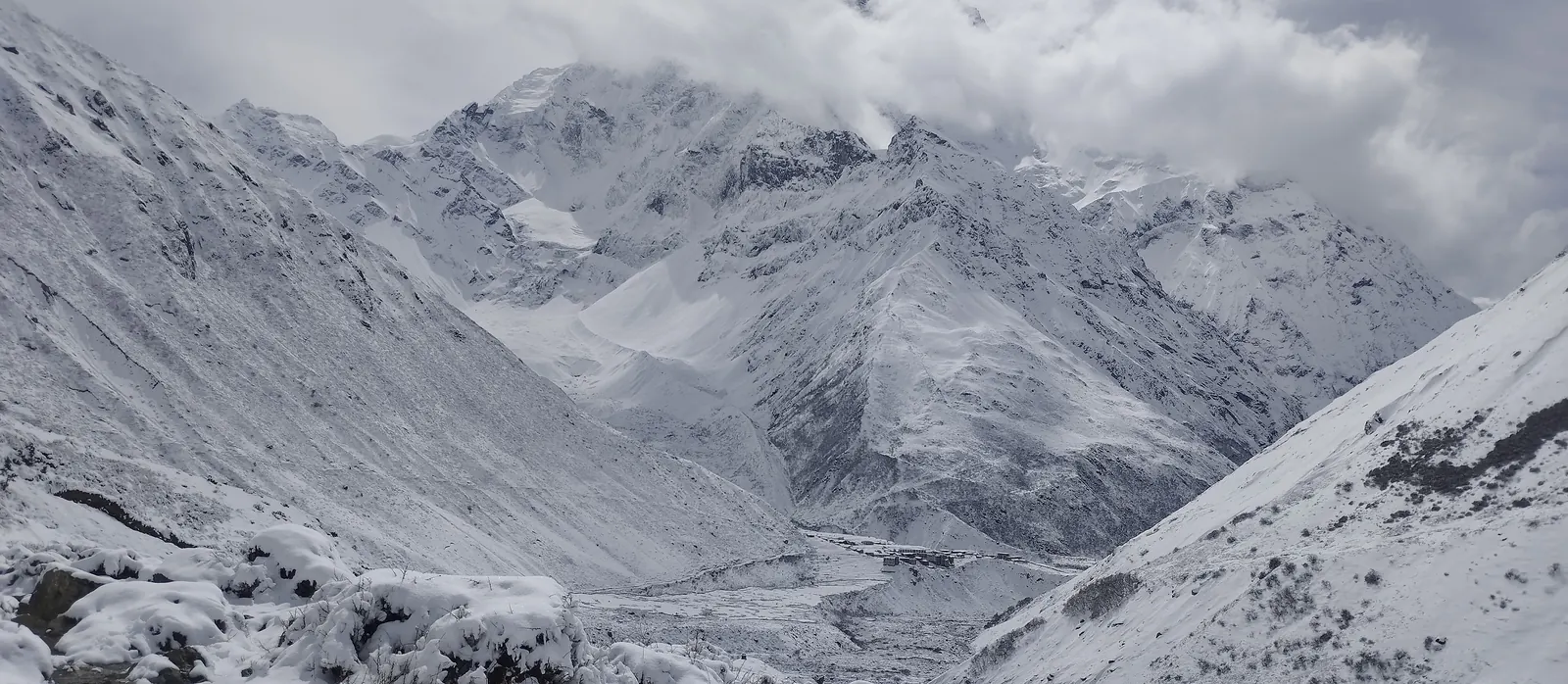
Photo: Remote Nepal Treks, 1 Apr 2023.
The short version
Altitude is the main thing to plan for on the Manaslu Circuit, and the itinerary is built around it. You don't sleep above 3,000m until Day 6 at Lho, and from there the nights go up slowly: two at Samagaon (3,530m), one at Samdo (3,860m) and one at Dharamsala (4,460m) before the 5,106m Larkya La. Headache, nausea, poor sleep and unusual tiredness are the early signs to mention to your guide. Your guide carries a pulse oximeter and a first aid kit, checks and logs your altitude at every stop above 3,000m, and works to a clear evacuation plan if anyone needs to go down.
Where altitude starts to matter
For the first five days you barely have to think about it. Day 2 actually takes you down, from Kathmandu at 1,400m to Machha Khola at 869m, and the gorge days to Jagat, Deng and Namrung stay under 2,700m.
The numbers that matter are the sleeping altitudes. Your body adjusts to where you spend the night, so that's what we pace.
| Day | Night at | Altitude | Gain on the day |
|---|---|---|---|
| 5 | Namrung | 2,630m | 770m |
| 6 | Lho | 3,180m | 550m |
| 7 | Samagaon | 3,530m | 350m |
| 8 | Samagaon (rest day) | 3,530m | 0m |
| 9 | Samdo | 3,860m | 330m |
| 10 | Dharamsala | 4,460m | 600m |
| 11 | Bimtang, via the 5,106m Larkya La | 3,720m | 646m up, 1,386m down |
Look at the gains from Lho on. None of them is big, and there's a whole day at Samagaon where you gain nothing at all. The full itinerary has the walking hours and distances for each of those days.
The signs to watch for
Altitude sickness usually starts mild. The common early signs are:
- a headache that doesn't go away with water and rest
- nausea, or losing your appetite
- feeling dizzy or light-headed
- being far more tired than the day's walk explains
- sleeping badly once you're above 3,000m
Plenty of trekkers feel some of this at some point, often on the first night at a new height, and it often settles by morning. It's still worth mentioning every time, because your guide can only work with what you tell them.
The serious signs are different, and they mean going down: confusion, stumbling or losing your balance, getting breathless while you're resting, or a cough that keeps getting worse. Your guide is watching for exactly these.
This is general guidance, not medical advice. If you have a heart or lung condition, or you're thinking about Diamox, talk to your doctor before you travel. Our packing list says the same.
What your guide does every day
Checks you at every stop above 3,000m. From Lho on, your guide checks and logs your altitude at each stop and asks how you're feeling. It takes a minute, and it means a problem gets spotted early.
Keeps the pace steady. The days above Samagaon are short on purpose. Samdo is about 4 hours, and Dharamsala is 3 to 4. There's no reason to race them, and your guide won't let you.
Carries the kit. A first aid kit and the oximeter go up the trail with every group, along with a clear evacuation plan in case someone needs to come down fast.
Makes the call on going down. If symptoms get worse instead of better, the answer at altitude is to descend, and your guide decides that with you. Below Dharamsala the trail runs back down through Samdo and Samagaon, so lower ground is never far away until you start the pass.
How the itinerary does most of the work
The rest day at Samagaon is the big one. You sleep two nights at 3,530m, and in between you can hike higher toward Manaslu Base Camp or walk up to Pungyen Gompa, then come back down to the same bed. That's climb high, sleep low, and it's the reason the gains after it can stay small. We've written up the Samagaon rest day on its own.
Then the night at Dharamsala puts you right under the pass, so the Larkya La day starts from 4,460m instead of from Samdo. It's still the hardest day of the trek. Our post on crossing the Larkya La walks through it hour by hour.
We explain the same thinking across all three of our routes in how acclimatization is built into the itineraries.
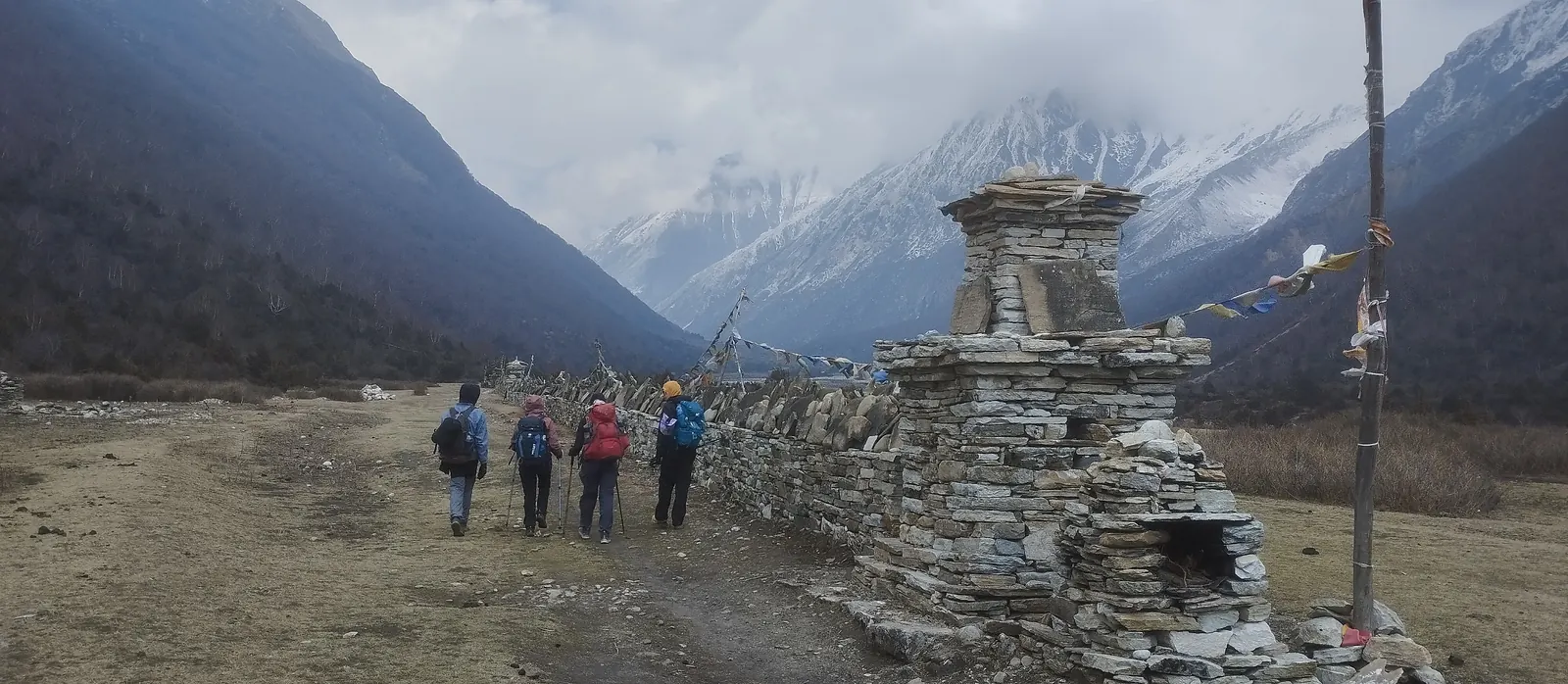
Photo: Remote Nepal Treks, 31 Mar 2023.
What you can do yourself
Drink plenty. Garlic soup is a trail favorite higher up, and tea counts. Bring a bottle and purification tablets or a filter so you can keep refilling.
Walk slowly, even when you feel fine. Feeling strong on Day 9 is great. It isn't a reason to push.
Say something early. A headache mentioned at Samdo is easy to deal with. One you kept quiet about until Dharamsala is harder.
Sort your insurance. Rescue infrastructure on Manaslu is thinner than on the Everest and Annapurna trails, so your travel insurance needs high-altitude evacuation cover. It isn't included in our price, so check your policy covers the 5,106m pass before you fly.
If you've never been above 3,500m, that doesn't rule you out, but read our honest take on Manaslu for first-time trekkers first. And for permits, cost and the rest of the trip, there's the complete Manaslu Circuit guide.
Frequently asked
Where does altitude sickness become a risk on the Manaslu Circuit?
Mostly from Day 6, when you first sleep above 3,000m at Lho (3,180m). After that the nights are Samagaon (3,530m, twice), Samdo (3,860m) and Dharamsala (4,460m), before the 5,106m Larkya La on Day 11.
What are the first signs of altitude sickness?
A headache that doesn't go away with water and rest, nausea or losing your appetite, feeling dizzy, being far more tired than the walk explains, and sleeping badly. Tell your guide about any of them.
What does the guide carry for altitude problems?
A first aid kit and a pulse oximeter, along with a clear evacuation plan. From Lho on, your guide checks and logs your altitude at every stop above 3,000m.
Should I take Diamox on the Manaslu Circuit?
Talk to your doctor before the trip. Diamox is on our packing list with that same note, and the decision is between you and your doctor.
Do I need special insurance for altitude?
Yes. Your travel insurance needs high-altitude evacuation cover, because the Larkya La reaches 5,106m. It isn't included in our price, so check your policy before you fly.