
Can a first-time trekker do the Manaslu Circuit? An honest answer
Written by our trekking team
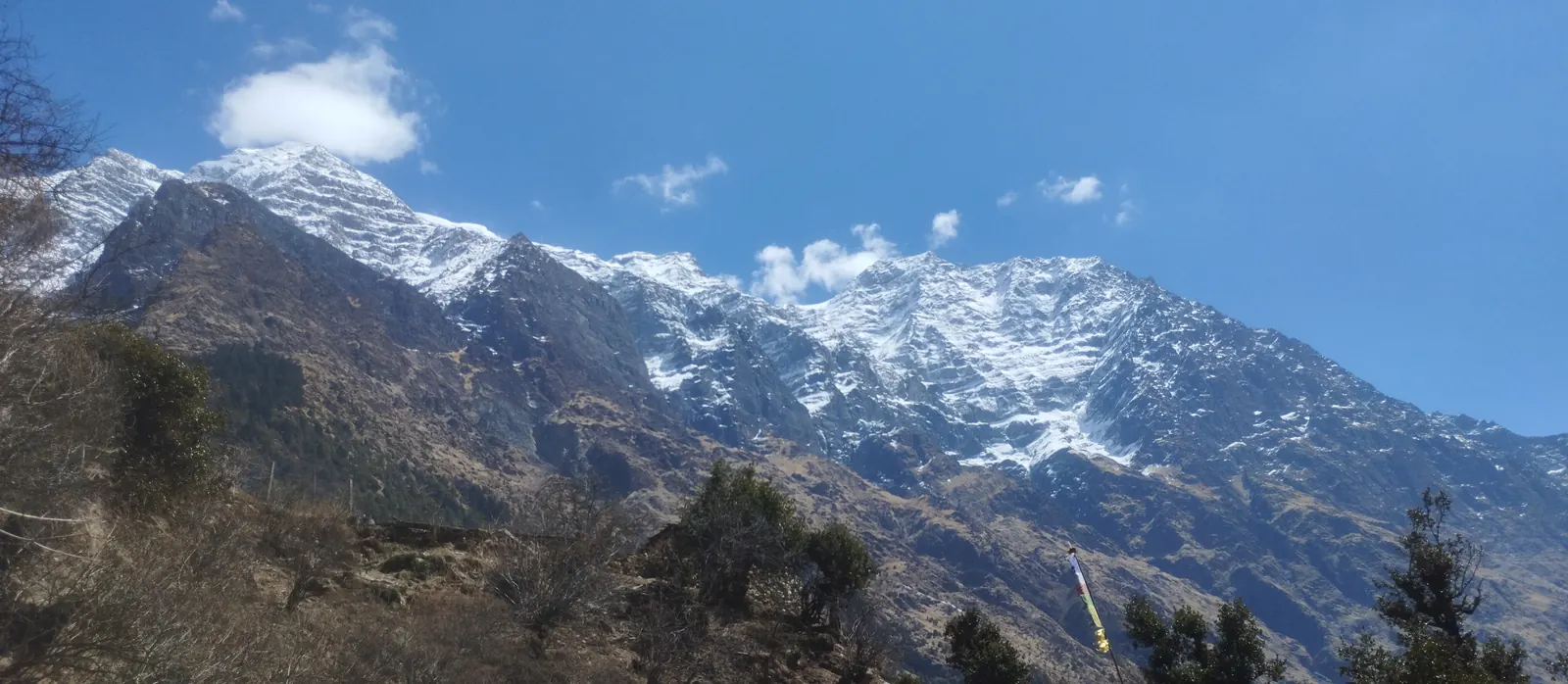
Photo: Remote Nepal Treks, 28 Mar 2023.
The short version
Yes, if you come prepared. The Manaslu Circuit isn't a beginner's trek, but it needs no technical skills. What it asks for is fitness to walk 5 to 7 hours a day, several days in a row, and patience with the altitude. Train for about 12 weeks and test yourself with a back-to-back weekend. On the trail, the short days up high, the rest day at Samagaon, porters, teahouses and a licensed guide who checks you every evening above 3,000m do the rest.
The honest answer
The Manaslu Circuit isn't a beginner's trek, and we'd rather tell you that now than on Day 11. But “first-time trekker” covers a lot of people, and plenty of them are ready for it.
Nothing on the route needs a skill you'd have to learn. There's no rope or crampon work, even on the 5,106m Larkya La. What the trek asks for is fitness that lasts for days in a row, and a willingness to go slowly once the air thins. The first you can build at home. The second we build into the itinerary.
So the real question isn't whether you've trekked before. It's what you're bringing.
Which kind of first-timer are you?
Most people who ask us this fall into one of three groups.
| Your background | What's new on Manaslu | What to do before you go |
|---|---|---|
| Fit, active, but never done a multi-day hike | Walking day after day, and the altitude | Follow a 12-week plan and do a back-to-back weekend test |
| Day hikes and weekend trips, never above 3,000m | Sleeping high, the pass day | Build up to two 5 to 7 hour days in a row; trust the pacing |
| Done a teahouse trek like Everest Base Camp or the Annapurna Circuit | A quieter trail, a harder pass | Not much. You're the trekker this route suits |
If you're in the first row, it's doable, but give yourself more time to prepare. Our 12-week training plan for Manaslu suggests adding an extra month at the start if you're coming from very little.
What you don't need
First-timers often worry about things that just aren't part of this trek.
Climbing skills. The Larkya La is a long, high walk, not a climb.
Camping gear. Every night from Machha Khola to Dharapani is in a teahouse or lodge, with a hot meal, including the basic lodges at Samdo and Dharamsala just below the pass.
A heavy pack. Porters carry the main bags. Above 3,500m all you carry is a daypack.
Navigation or paperwork. A licensed guide walks the whole route with you, as the restricted-area rules require, and we file the RAP, MCAP and ACAP before you land.
A trekking partner. On Manaslu you can go solo. Our groups top out at eight.
What will feel new
Two things, mostly.
The first is the rhythm. Days 3 to 5 run from Machha Khola up the Budhi Gandaki to Namrung, about 61km over three days of 5 to 7 hours each. None of it is high, and none of it is steep for long. But if you've never walked three full days in a row, this is where you find out what it feels like.
The second is the altitude. From Day 7 you sleep above 3,500m, and by Day 10 you're at Dharamsala, 4,460m. Everything takes more breath up there, even tying your boots. That's normal, and experienced trekkers feel it too. If you're new, it just means you haven't met it yet.
Photo: Remote Nepal Treks, 28 Mar 2023.
How the trek looks after you
Here's what makes us comfortable taking well-prepared first-timers: the hard parts are spaced out, and you get help with each one.
Once you're above Namrung, the days get short. From Lho to Dharamsala no walking day is longer than 4 hours. Day 8 is a full rest day at Samagaon (3,530m), with an optional hike toward Manaslu Base Camp or a gentler one to Pungyen Gompa. Then a short day to Samdo, and a staging night at Dharamsala so pass day starts at 4,460m. Our note on how acclimatization works on these routes explains why that order matters.
And every evening above 3,000m your guide checks how you're handling the altitude with a pulse oximeter. If you're new to this, that check is worth a lot. You don't have to judge on your own whether a headache is nothing or something.
The Larkya La day is still long: 8 to 9 hours, starting in the dark, then a big descent to Bimtang. By then you've had nine days on the trail, and you'll know your own pace. The full account of the pass day shows what to expect, hour by hour.
Getting ready if it's your first trek
Start training about three months out. Spend most of that time on long walks at the weekend, and in the last month put two of them back to back.
Do one test weekend before you book flights if you can. Walk 5 to 7 hours on Saturday with a daypack and do it again on Sunday. If you can manage that without dreading the Monday, you're in good shape for the circuit.
Break in your boots on those walks, and use the daypack you'll actually carry. Our Manaslu packing list covers the rest.
And tell us where you're starting from. When you get in touch, say what you've done before, even if it's nothing more than long walks at home. We'll give you an honest read on whether to go this season or train a bit longer first.
Manaslu as a first big Himalayan trek
A lot of first-timers start on Everest Base Camp or the Annapurna trails because they're the names everyone knows. They're beautiful, but in season they're busy.
Manaslu gives you a similar effort on a much quieter trail. Because it's a restricted area, everyone on it has a permit and a guide, so you won't be sharing the viewpoints with a crowd. Tibetan-influenced villages like Lho, Samagaon and Samdo, a real 5,106m pass, and a teahouse every night. As first big treks go, that's a very good one to start with.
For permits, prices and everything else, start with our Manaslu Circuit Trek guide.
Frequently asked
Can a first-time trekker do the Manaslu Circuit?
Yes, if you come prepared. It isn't a beginner's trek, but it needs no technical skills. You need the fitness to walk 5 to 7 hours a day, several days in a row, and the itinerary and your guide handle the altitude.
Do I need altitude experience for Manaslu?
It helps, but it isn't required. The itinerary keeps the days short above Lho, adds a rest day at Samagaon (3,530m) and a staging night at Dharamsala (4,460m), and your guide checks you with a pulse oximeter every evening above 3,000m.
Do I need camping or climbing gear for Manaslu?
No. Every night is in a teahouse or lodge with a hot meal, and the Larkya La needs no rope or crampon work on the standard route. Porters carry the main bags, so above 3,500m you only carry a daypack.
How should a beginner prepare for the Manaslu Circuit?
Train for about 12 weeks, with an extra month at the start if you're coming from very little. Build up to two back-to-back hikes of 5 to 7 hours with a daypack, and break in your boots on them.
Can I do Manaslu as a solo first-timer?
Yes. On Manaslu we can file the Restricted Area Permit for one trekker, as long as your licensed guide walks the whole route with you.