
Training for the Manaslu Circuit: a 12-week plan
Written by our trekking team
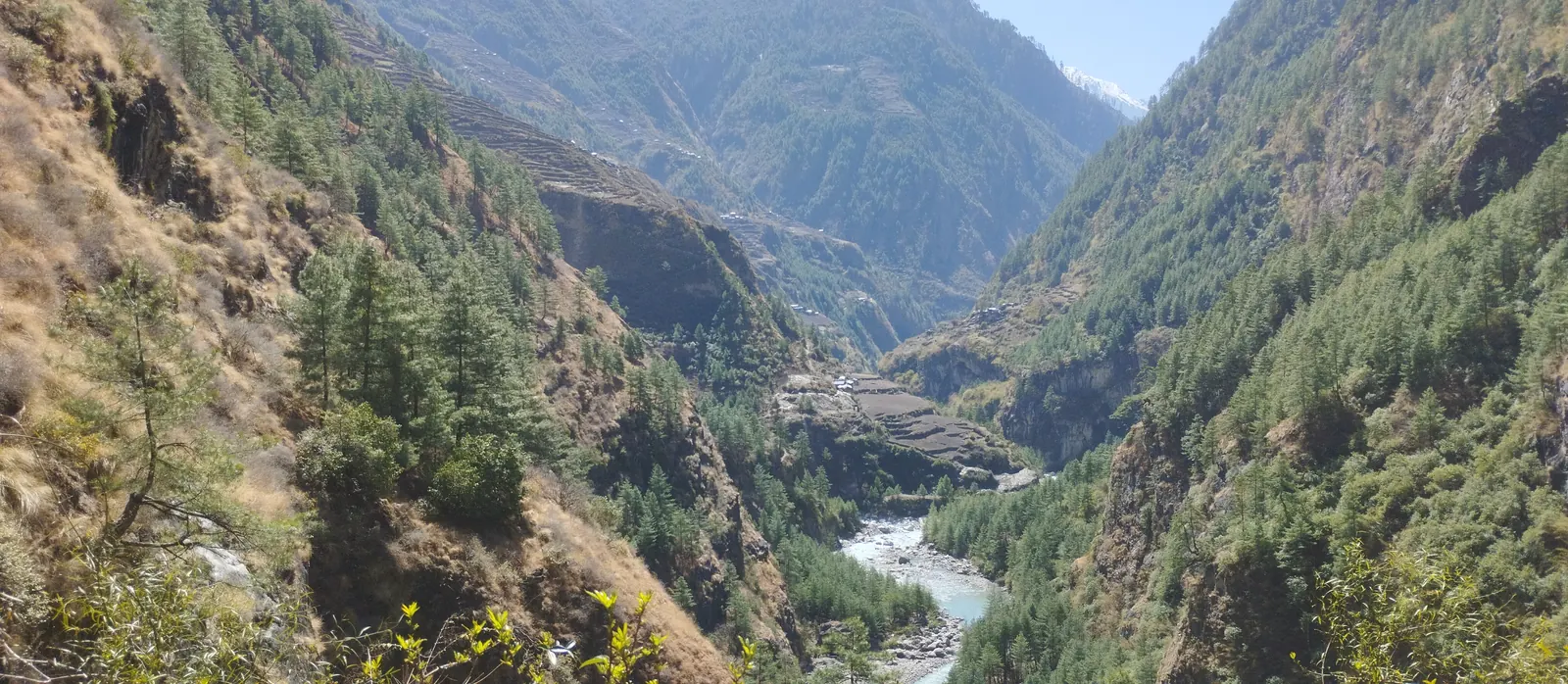
Photo: Remote Nepal Treks, 27 Mar 2023.
The short version
Train for back-to-back days. The Manaslu Circuit is about 147km over nine walking days, with a Larkya La day of 8 to 9 hours and two long descents after it. Over 12 weeks, build up to two consecutive hikes of 5 to 7 hours with a daypack, add stairs and slow step-downs for your knees, and break in your boots. Altitude you can't train at home; the rest day at Samagaon and your guide take care of that.
What you're actually training for
Before you plan a single session, look at the shape of the trek. Manaslu isn't one hard day. It's about 147km over nine walking days, and the hard part is getting up and doing it again.
| Stretch | What it asks of you | Train it with |
|---|---|---|
| Days 3–5, Machha Khola to Namrung | 61km in three days, 5 to 7 hours each | Back-to-back long walks |
| Days 6–10, up to Dharamsala | Short days, 330 to 600m of climbing, thin air | Steady uphill pace, not speed |
| Day 11, the Larkya La | ~26km, 8 to 9 hours, up 646m then down 1,386m | One or two very long training days |
| Day 12, Bimtang to Tilije | ~22km and 1,420m of descent, the day after the pass | Downhill walking and leg strength |
So the plan below aims at three things: endurance across consecutive days, legs that cope with long descents, and enough base fitness that the altitude is the only new thing you're dealing with. The full day-by-day numbers are in our distance and walking hours breakdown.
A 12-week plan
Twelve weeks is what we'd suggest if you're already reasonably active. Starting from very little? Add a month at the beginning and keep it easy. Fitter than this? Skip ahead to the build phase.
| Weeks | During the week | At the weekend |
|---|---|---|
| 1–4, base | 3 walks or easy runs of 45 to 60 min; 2 short leg and core sessions | One walk of 2 to 3 hours on hilly ground |
| 5–8, build | Add stairs or incline work; leg sessions get a step-down exercise | One hike of 4 to 5 hours with a light daypack |
| 9–11, peak | Keep the stairs; one longer midweek walk | Two hikes back to back, 5 to 7 hours each, once with a single 8-hour day |
| 12, taper | Short, easy walks only | Rest, pack, sleep well |
The weekend column matters more than anything in the middle. If a busy week means you miss the stairs, fine. Try not to miss the long walks.
And walk slowly on them. On the trail above Samagaon you'll move at a pace that feels almost lazy, and practicing a steady, talk-while-you-walk rhythm at home is good training in itself.
Don't forget the downhill
Most people train for going up. On Manaslu the descents are what leave legs sore: 1,386m down from the Larkya La to Bimtang, then another 1,420m to Tilije the next day.
Step-downs. Stand on a step, lower the other foot slowly to the floor, come back up. Slow is the point. It builds the muscles that brake you on a descent.
Walk down, not just up. On hill days, walk the descent rather than jogging it. If you use a stair machine or a building's stairwell, take the stairs back down too.
Practice with poles. If you'll use trekking poles on the trail, use them on training hikes so they feel natural by the time you're coming off the pass.
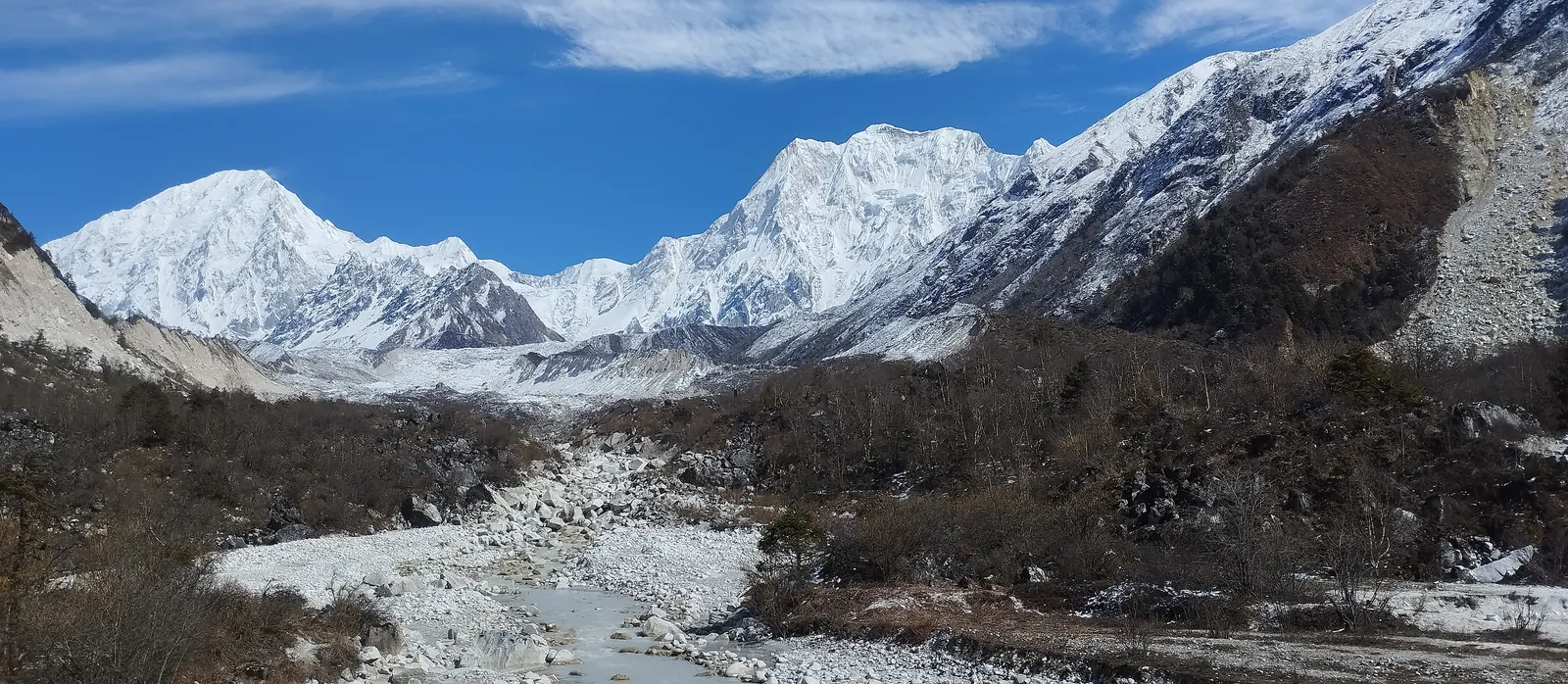
Photo: Remote Nepal Treks, 3 Apr 2023.
If you live somewhere flat
Plenty of people train for the Himalaya without a hill nearby. Stairs are your friend: an office stairwell, a stadium, a parking garage. A treadmill on a steep incline works for uphill hours. Step-ups onto a sturdy bench with a light pack cover the rest, and the step-downs above take care of descents.
For the long weekend walks, distance on flat ground still counts. Time on your feet is the main thing you're building.
The part you can't train at home
Being fit doesn't stop altitude from affecting you. That's normal, and it's why the itinerary is paced the way it is. You get a full acclimatization day at Samagaon (3,530m), then a short day up to Samdo (3,860m), then a staging night at Dharamsala (4,460m) before the 5,106m pass. Your guide checks how you're handling the altitude, with a pulse oximeter, at every stop above 3,000m.
What fitness does do is give you room. When the walking itself feels easy, you've got energy left for the thin air. That's the real reason to train.
If you've slept above 3,500m on an earlier trek, even better. Our honest difficulty grade covers who the circuit suits, and the Larkya La day post shows what the big day asks.
Train in your trek kit
Wear the boots you'll trek in for every long walk from week 5 on. New boots on day one in Machha Khola are a blister plan. Carry the daypack you'll actually use too. Porters take the shared gear, so above 3,500m a daypack is all you carry, and you want it to feel like part of you by then.
The Manaslu packing list shows what goes in it.
How you know you're ready for Manaslu
If you can walk 6 to 7 hours one day and do it again the next, without dreading it, you're in good shape for the circuit. That's the benchmark. The rest day, the short days high up and a guide who knows the trail handle what training can't.
If you have a health condition, or you're unsure how your body handles hard exercise, check with your doctor before you start. For everything else about the trek, our Manaslu Circuit Trek guide is the place to start.
Frequently asked
How should I train for the Manaslu Circuit?
Build endurance across consecutive days. Over 12 weeks, work up to two back-to-back hikes of 5 to 7 hours with a light daypack, add stairs or incline work, and train your legs for long descents.
How fit do you need to be for the Manaslu Circuit?
If you can walk 6 to 7 hours one day and do it again the next without dreading it, you're in good shape for the circuit.
What is the hardest day to train for on Manaslu?
Day 11, the Larkya La crossing: about 26km and 8 to 9 hours, climbing 646m to 5,106m and then descending 1,386m to Bimtang. Day 12 adds another 1,420m of descent to Tilije.
Can I train for Manaslu if I live somewhere flat?
Yes. Use stairs, a treadmill on a steep incline and step-ups with a light pack, and keep your long weekend walks even on flat ground. Time on your feet is the main thing you're building.
Can I train for the altitude on Manaslu?
Not really at home. The itinerary handles it with a full acclimatization day at Samagaon, a short day to Samdo and a staging night at Dharamsala, and your guide checks your altitude with a pulse oximeter at every stop above 3,000m.