
Taplejung to Ghunsa: the first week of the Kanchanjunga Trek
Written by our trekking team
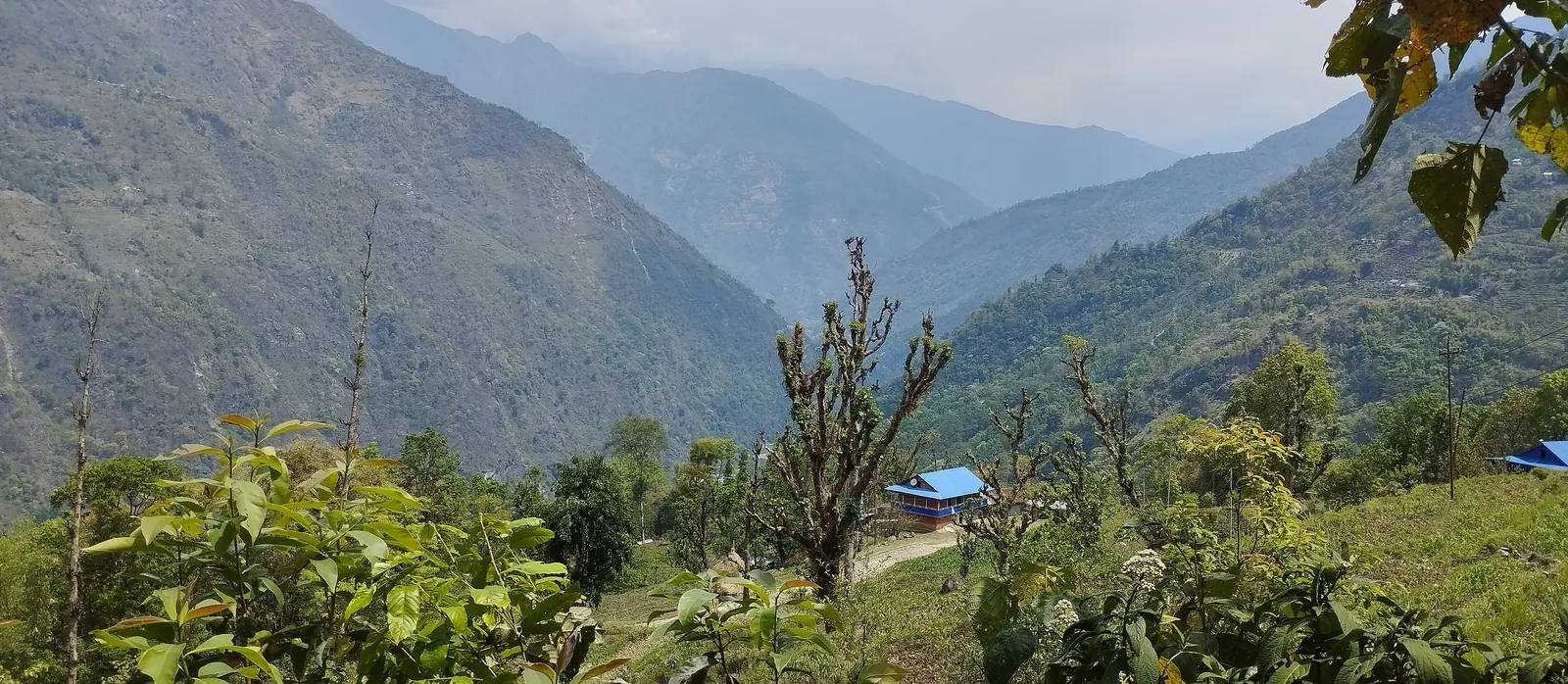
Photo: Remote Nepal Treks, 25 Apr 2023.
The short version
The first six walking days of the Kanchanjunga Trek take you from Taplejung (1,820m) to Ghunsa (3,595m), from Limbu farmland into high forest. You drop to Mitlung in the Tamor valley, follow the river through Sinwa and Chirwa to Sekathum, where your RAP is first checked, then climb the Ghunsa Khola gorge through Amjilosa and Gyabla. Every night is a teahouse. It's warm, green and quiet, and it's the gentlest part of a hard trek, so it's the place to settle into a slow pace.
Six days, one valley system
| Day | Stage | Altitude | Change | Time |
|---|---|---|---|---|
| 3 | Taplejung to Mitlung | 921m | ▼ 899m | 5–6 hrs, ~14km |
| 4 | Mitlung to Chirwa | 1,270m | ▲ 349m | – |
| 5 | Chirwa to Sekathum | 1,640m | ▲ 370m | – |
| 6 | Sekathum to Amjilosa | 2,510m | ▲ 870m | 5–6 hrs, ~8km |
| 7 | Amjilosa to Gyabla | 2,730m | ▲ 220m | – |
| 8 | Gyabla to Ghunsa | 3,595m | ▲ 865m | 5–6 hrs, ~12km |
All six nights are in teahouses.
Days 3 to 5: down into the Tamor valley
The trek begins by going down. From Taplejung the trail drops 899m to Mitlung, through terraced farmland and small Limbu settlements. On our 2023 trip, on 25 April, it felt like early summer: dirt paths between tin-roofed houses, bamboo, cattle stalled under whitewashed farmhouses and forested ridges fading into haze.
The Limbu hill country is its own cultural region, and most Nepal itineraries never pass through it. You get it at both ends of this trek, on the way in and again on the way out through Yamphudin.
From Mitlung the trail follows the Tamor upstream through Sinwa to Chirwa. Farmland gradually gives way to denser forest as the valley narrows. These are two moderate days, 349m and 370m of gain, and a good chance to find a pace you can hold for three weeks.
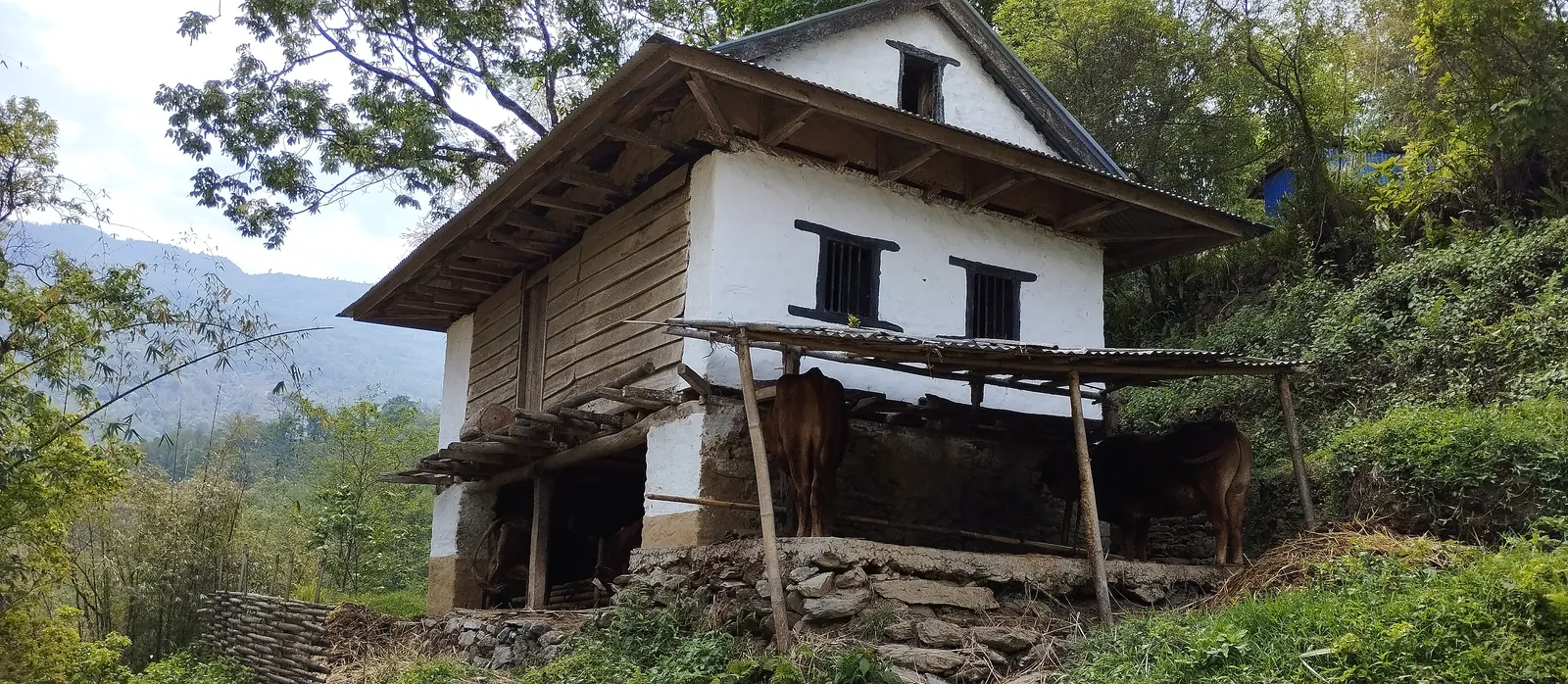
Photo: Remote Nepal Treks, 25 Apr 2023.
Day 5: Sekathum and the restricted area
Sekathum (1,640m) is where the restricted area proper starts. Your Restricted Area Permit is checked here for the first time, and from this point no trekker goes further without paperwork already on file. We file it before you arrive, so all you need is your passport. Our permits explainer shows how the RAP and KCAP work together.
Days 6 and 7: up the Ghunsa Khola
Day 6 is the hard one in this section. The trail climbs steadily along the Ghunsa Khola gorge, 870m in about 8km, to Amjilosa at 2,510m. On the map it's short. Underfoot it's one of the harder single days on the whole trek, so take it slowly and let the 5 to 6 hours be 6.
Day 7 is the reward: only 220m of gain to Gyabla (2,730m), into rhododendron and fir forest as the valley opens a little. The tree line is getting closer.
Day 8: arriving at Ghunsa
The last day of the approach climbs 865m, about 12km and 5 to 6 hours, to Ghunsa at 3,595m. In late April the final stretch ran through rhododendron and fir under cliffs that were wrapped in cloud by mid-afternoon.
Ghunsa is the trek's hub village. Your KCAP is checked here, and it's the last real settlement before the high country: timber houses, prayer flags, boulders on the grass and hand-painted lodge and trekking-shop signs on stone walls. Teahouse comfort starts to thin out from here.
Day 9 is a rest day in Ghunsa, with an optional climb to the ridge above the village, before the walk up to Khambachen. Our spring trip report picks up from there.
How to walk the first week
- Start slow. It's tempting to push on the low, warm days. Don't. Three weeks is long, and the habit you form here carries you over the Sele La.
- Pack for heat. A sun hat, light layers and more water than you think. Down jackets come out later.
- Expect haze in spring. The lower ridges fade into haze in April and May. In autumn the views down here are sharper.
- Use Ghunsa well. The rest day is a good time to sort your kit before the higher, simpler lodges.
The full route is in our Kanchanjunga itinerary, day by day, and the trek page has every day with our photos.
Frequently asked
How long does it take to walk from Taplejung to Ghunsa?
Six walking days on our itinerary, Days 3 to 8: Mitlung, Chirwa, Sekathum, Amjilosa, Gyabla and Ghunsa.
Where is the RAP checked on the Kanchanjunga Trek?
At Sekathum on Day 5, where the restricted area proper begins. The KCAP is checked at Ghunsa on Day 8.
Are there teahouses between Taplejung and Ghunsa?
Yes. Every night from Mitlung to Ghunsa is in a teahouse. Lodging gets more basic above Ghunsa.
What is the hardest day before Ghunsa?
Day 6, Sekathum to Amjilosa: a steep, sustained 870m climb up the Ghunsa Khola gorge in about 8km, 5 to 6 hours.
How high is Ghunsa?
3,595m. It's the hub village of the trek and has a rest day built in on Day 9.