
The Kanchanjunga Trek in spring: our late-April trip
Written by our trekking team
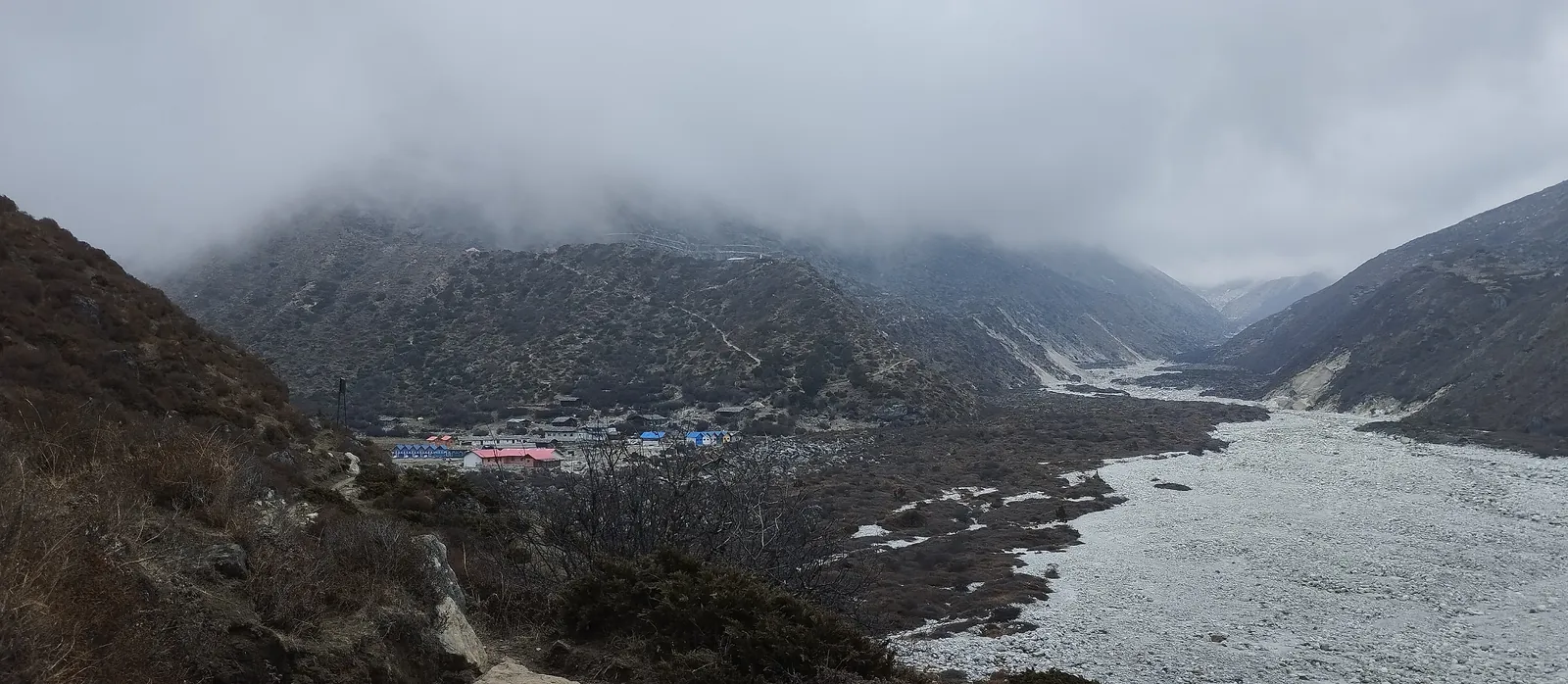
Photo: Remote Nepal Treks, 30 Apr 2023.
The short version
Spring on the Kanchanjunga Trek is green and warm down low, and still wintry up high. On our trip from 25 April to 12 May 2023, the hill villages near Taplejung were warm and hazy. Above Ghunsa we woke to fresh snow on the ridges, cloud usually came in by late morning, and the Sele La crossing on 3 May was snow all the way across. The rhododendron was in bloom just above Ghunsa. None of it stopped the trek. It just shaped how we walked each day.
The trip at a glance
Our Kanchanjunga Trek guide covers permits, cost and who the route suits. This page is narrower. It's what the trail actually looked like in late April and early May, taken from our own photos and the time and place each one was stamped with.
This trip didn't run the full 21-day route. We went up the north side as far as Khambachen and the trail toward Jannu, came back down to Ghunsa, and crossed the Sele La from there. So there's nothing here from Lhonak or Pangpema.
| Date | Where | Altitude | What we saw |
|---|---|---|---|
| 25 Apr | Below Taplejung | ~1,260m | Warm, green, hazy ridges |
| 29 Apr | Ghunsa | 3,595m | Cloud on the cliffs by mid-afternoon |
| 30 Apr | Ghunsa → Khambachen | 4,050m | Fresh snow on the ridges at dawn |
| 1 May | Hike above Khambachen | ~4,370m | Down jackets at breakfast, cloud by 11am |
| 2 May | Above Ghunsa | ~3,440m | Rhododendron in bloom, clear morning |
| 3 May | Sele La passes | ~4,570m | Full snow cover, overcast |
| 9–10 May | Suketar and Taplejung | ~2,400m | Blue skies, hot sun |
| 11 May | Kanyam tea gardens | ~1,600m | Drive back to Bhadrapur |
Altitudes for Ghunsa and Khambachen are the ones in our itinerary. The others marked “~” are rough readings from the photos themselves.
The approach: warm and hazy
The first walking days drop toward the Tamor valley through farmland and small Limbu villages. On 25 April it felt like early summer. Tin-roofed houses, bamboo, cattle stalled under whitewashed farmhouses, and long views down forested ridges that faded into haze.
That haze is normal for spring in the eastern hills. You trade the sharp, far views of autumn for warmth and green. Pack for heat on these days: a sun hat, light layers, and more water than you think.
We reached Ghunsa, the last real village before the high country, on the afternoon of 29 April. By 3pm the cliffs above it were wrapped in cloud. Wooden houses, prayer flags, boulders scattered across the grass, and hand-painted lodge signs on the stone walls. After a week of lower trail, it's the first place that feels properly Himalayan.
Ghunsa to Khambachen: snow at dawn, cloud by lunch
We left Ghunsa on 30 April to fresh snow on the ridge above the village. It hadn't reached the trail. It just dusted everything above the houses, and it was a good reminder of where we were heading.
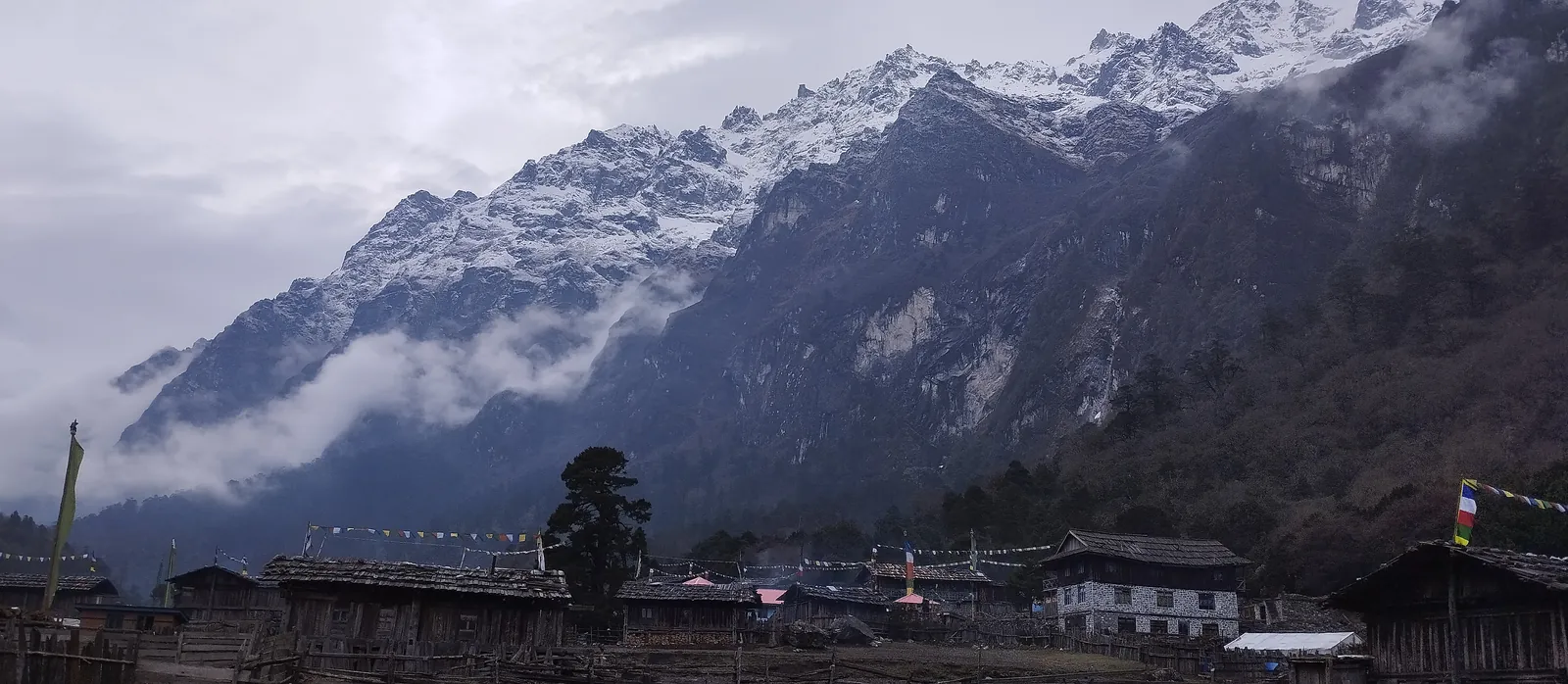
Photo: Remote Nepal Treks, 30 Apr 2023.
The trail up the valley is easy to follow. Painted signposts mark each stop: Tartang at 3,593m by mid-morning, then Syuktang among bare birch, with arrows to the Labuk teashop. Early in the season the trees up here still have no leaves, which gives the valley a quiet, wintry look even on a mild day.
By early afternoon we passed the sign for the Jannu viewpoint and the turn toward Jannu base camp, and the cloud had come down onto the valley walls. Khambachen appeared at about 2pm, a cluster of lodges at the head of a wide, pale gravel riverbed.
The next morning was cold enough that everyone stood outside the painted lodge rooms in down jackets. Our acclimatization day followed the itinerary's side hike toward the Jannu trail, up onto the moraine to roughly 4,370m. By 11am we were walking in cloud again.
The lesson for spring: walk early. Up high, the clearest hours were the mornings, and the itinerary's short days (Ghunsa to Khambachen is about 10km and 5 to 6 hours) mean you can start at first light and still be in by lunch. It's also why the rest days matter. Our post on how acclimatization days are placed explains the thinking.
Snow on the Sele La
Back in Ghunsa on 2 May, the morning was clear and the slope above the village was full of rhododendron in bloom, pink against the snow peaks across the valley. If you want spring color, this is where you'll find it.
Then we went up toward the Sele La. The crossing links three passes (Sele La, Sinion La and Mirgin La), all above 4,200m, with no village between Ghunsa and Cheram. On 3 May, at around 4,570m, it was snow from one side to the other. Black rock ridges stuck out above the white, one with a single tall pinnacle on top, and the only trail was a line of footprints across the snowfield.
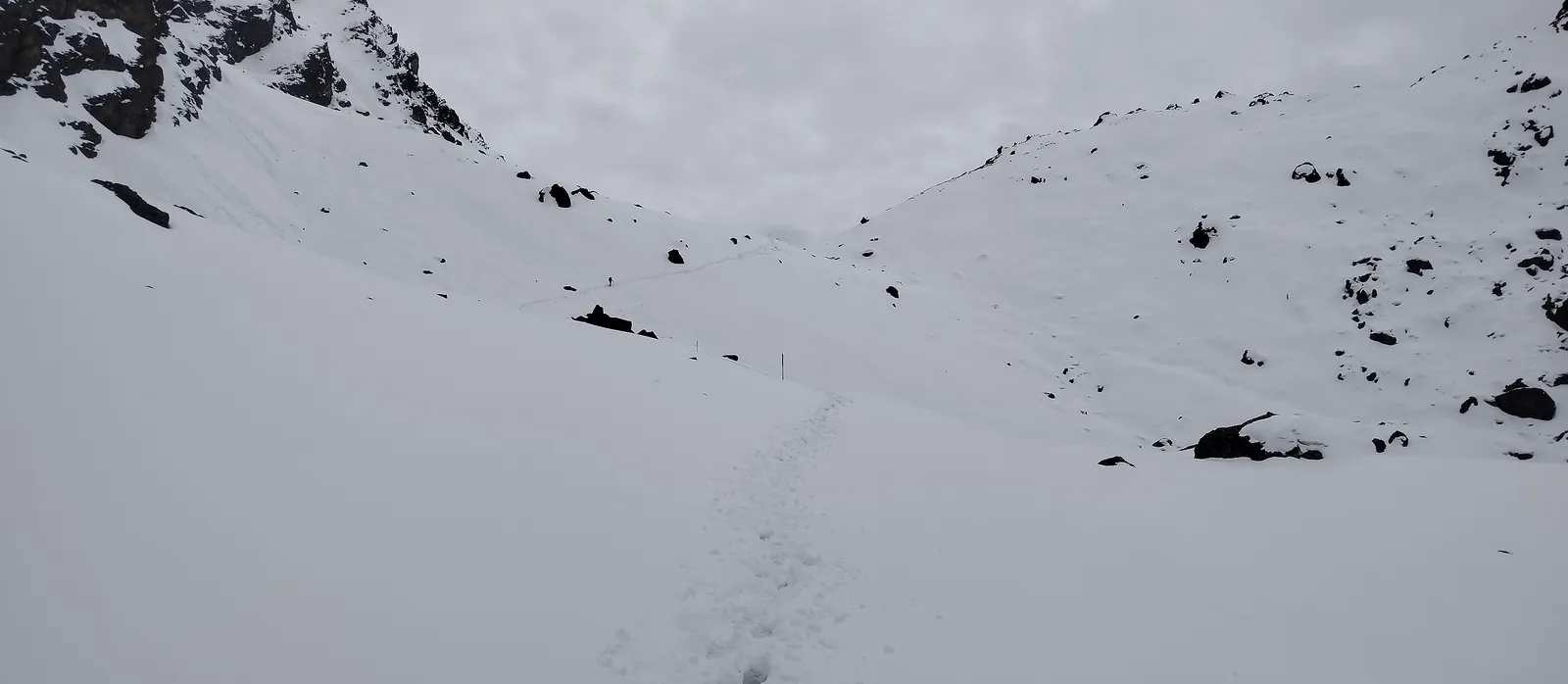
Photo: Remote Nepal Treks, 3 May 2023.
That sounds harder than it was. Snow in early May is expected here, and it's why we treat this day the way we do. We only attempt it with a clear forecast. Your guide picks the line and sets the pace. What you need is warm layers, gloves, sunglasses for the glare and boots that are comfortable in snow, all of which are on our Kanchanjunga packing list.
Walking out to the tea hills
Our standard itinerary exits through Yamphudin. This group walked out the other way, by the ridge villages around Suketar and down past Taplejung. Either way, the change at the end of a spring trip is sudden.
A week after the Sele La snow, on 9 and 10 May, half of us were in T-shirts and shorts under a blue sky, looking back over the hills from a dusty road. Taplejung sprawled over its hillside below us.
The drive back to Bhadrapur runs through the Kanyam tea gardens at about 1,600m, rows of bright green bushes curving over every hill. It's worth asking the driver to stop. On 12 May we were on the road to Bhadrapur airport, with the flight to Kathmandu that afternoon.
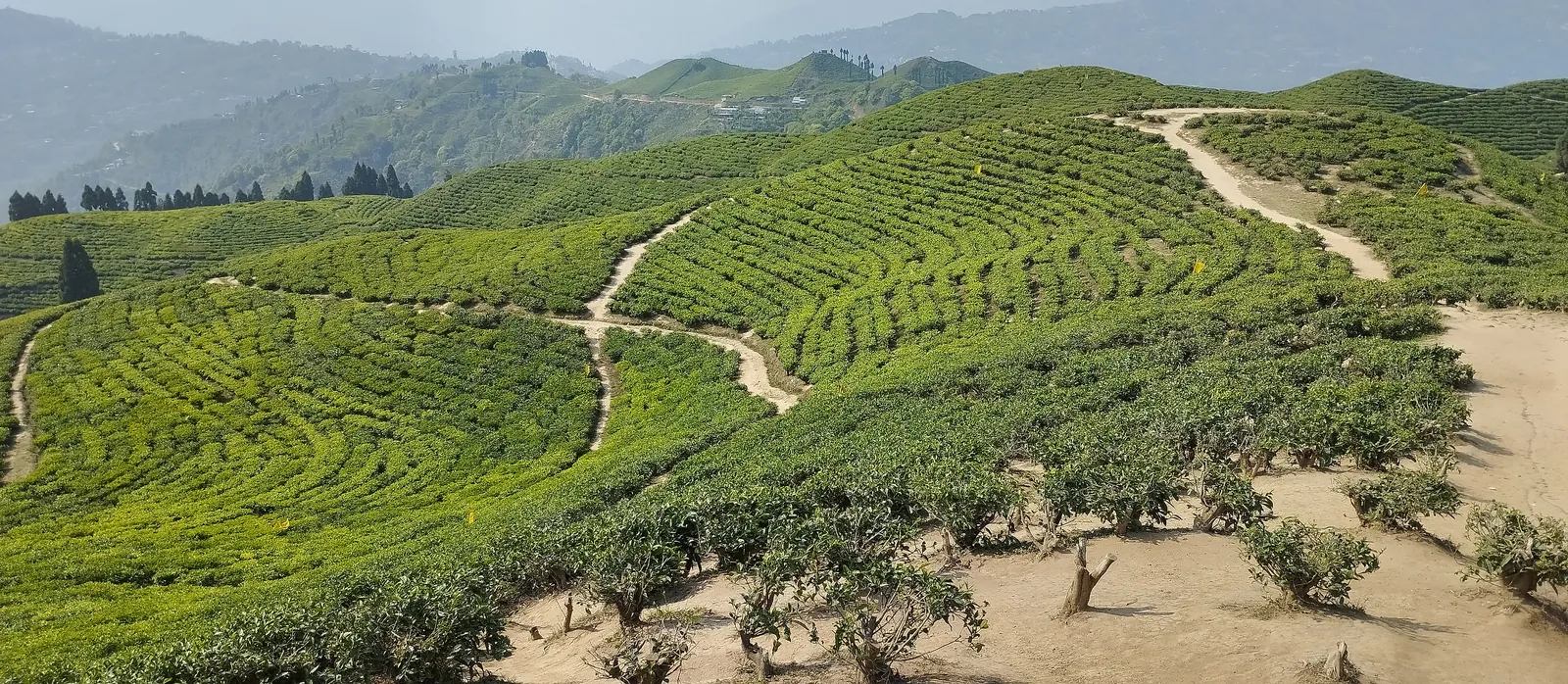
Photo: Remote Nepal Treks, 11 May 2023.
Planning a spring Kanchanjunga trip
Spring is a good season for Kanchanjunga. It gives you warm lower days, flowers, and a trail you'll share with very few people. Compared with spring on the Everest or Annapurna trails, it's a different world. Here's what our trip says to plan for:
- Two climates in one bag. Light clothes for the hot, hazy approach and a proper down jacket for Khambachen mornings.
- Snow on the high ground. Expect it on the Sele La in early May. It's why that day waits for a clear forecast.
- Morning starts. Cloud came in by late morning on most high days, so the best views and the easiest walking are early.
- Haze down low. Spring views from the lower ridges are softer than in autumn. Our autumn vs spring comparison goes into that trade-off.
You can see more of the photos from this trip under the matching days of our 21-day Kanchanjunga itinerary.
Frequently asked
Is there snow on the Kanchanjunga Trek in spring?
On the high ground, yes. On our 2023 trip there was fresh snow on the ridge above Ghunsa on 30 April, and the Sele La crossing on 3 May was snow-covered at about 4,570m. The trail below Ghunsa was clear.
When does the rhododendron bloom on the Kanchanjunga Trek?
On our trip it was in bloom on the slope just above Ghunsa on 2 May. Lower down, the approach villages were already in full green by late April.
What is the weather like up high in spring?
Mornings were the clearest part of the day. Above Ghunsa, cloud came in by late morning or early afternoon on most days, so we started early and were in by lunch.
Is spring a good time for the Kanchanjunga Trek?
Yes. You get warm lower days, flowers and very few other trekkers. Plan for snow on the Sele La, which we only cross with a clear forecast, and for hazier views from the lower ridges than in autumn.
How do you get to the start of the Kanchanjunga Trek?
A 45-minute flight from Kathmandu to Bhadrapur, then a 6 to 7 hour drive into the eastern hills toward Taplejung. The road runs through the Kanyam tea gardens at about 1,600m.