
Manaslu Circuit packing list: what to bring and why
Written by our trekking team
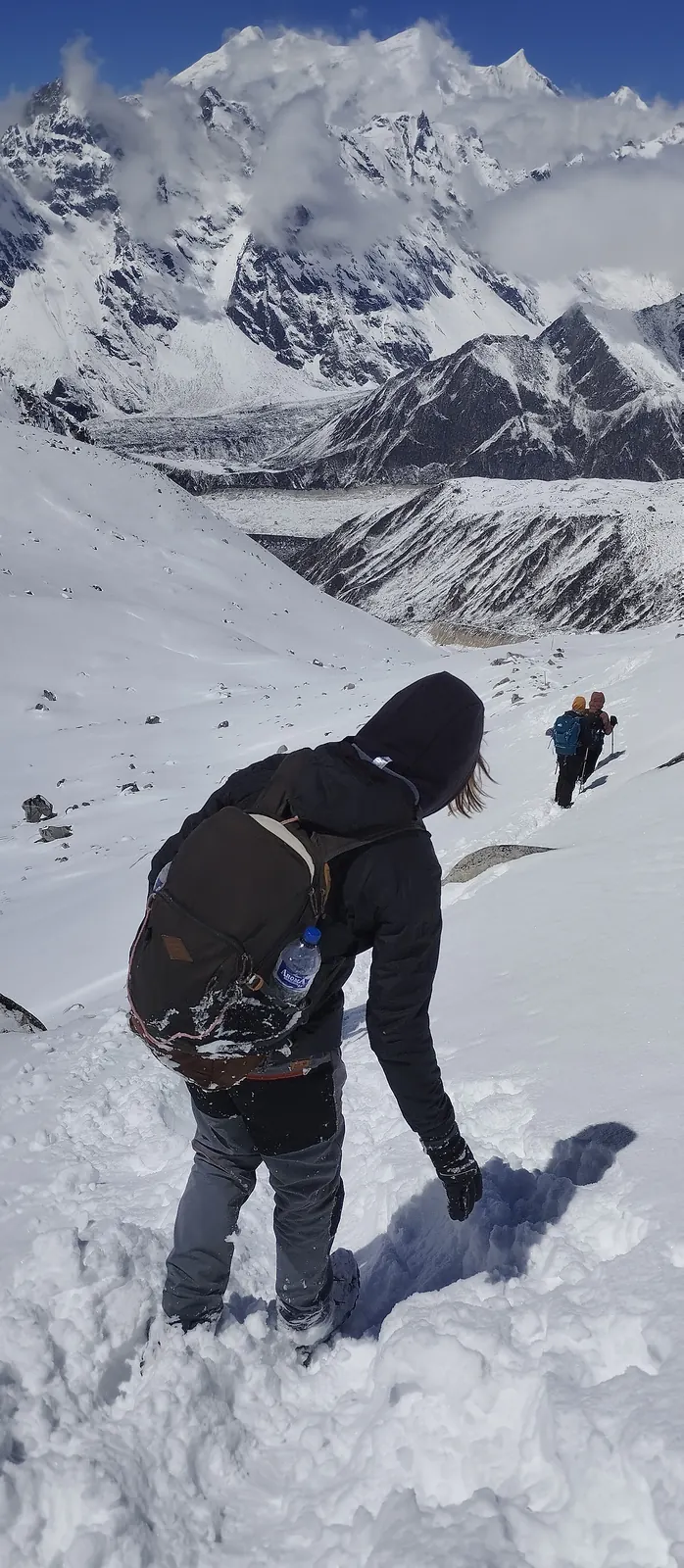
Photo: Remote Nepal Treks, 2 Apr 2023.
The short version
Pack for two climates and one very cold morning. The Manaslu Circuit starts at 869m in a warm river gorge and crosses the Larkya La at 5,106m, so you need light layers for the bottom and a down jacket, a warm hat and a sleeping bag rated to at least -15°C for the top. Your main bag is a duffel the porters carry, at one porter for every two trekkers. You carry a 30 to 35 litre daypack. You don't need camping gear, because every night is in a teahouse or lodge.
How your bags work on the trail
There are two bags. The duffel holds everything you won't need until the evening, and the porters carry it from lodge to lodge. Our price includes porters at one for every two trekkers.
The daypack, 30 to 35 litres, stays on your back. It holds what you need while you walk: water, layers, sun protection, snacks and your documents.
You won't see the duffel again until the lodge. Pack the daypack for the whole day's weather.
The full list
This is the same list as the packing section of our Manaslu trek page, grouped the way you'd lay it out on the bed.
| Group | What to bring |
|---|---|
| Upper body | Moisture-wicking base layer tops (2–3), a fleece or light insulated mid-layer, a down jacket for high-altitude nights, a waterproof, windproof outer shell jacket |
| Lower body | Moisture-wicking base layer bottoms, trekking trousers (2 pairs), fleece or thermal trousers for the evenings, waterproof, windproof shell pants |
| Feet | Broken-in waterproof trekking boots, camp shoes or sandals, wool or synthetic trekking socks (4–5 pairs), liner socks, gaiters |
| Head and sun | Sun hat and a warm insulated hat, a buff or neck gaiter, UV-protective sunglasses (glacier-rated for pass day), high-SPF sunscreen and lip balm |
| Personal and medical | Personal first aid kit and medications, Diamox (ask your doctor first), hand sanitizer and toiletries, trekking poles, a headlamp with spare batteries, a reusable bottle with purification tablets or a filter |
| Documents | Passport with at least 6 months' validity, passport-sized photos for the permits, travel insurance documents |
| Everything else | Duffel for the porters, a 30–35L daypack, a sleeping bag rated to at least -15°C, a power bank and universal adapter, snacks or energy bars |
The items that matter most, and why
Boots you've already walked in. Ten days on foot and about 147km, with a 1,386m descent off the pass and another 1,420m the day after. New boots and that much downhill don't mix. Our 12-week training plan is a good excuse to break them in.
The sleeping bag. The highest night is Dharamsala at 4,460m, in a basic lodge right below the pass, and Samdo isn't much warmer. A bag rated to at least -15°C is what keeps those nights comfortable.
The headlamp, with spare batteries. The Larkya La day starts by headlamp, well before sunrise, so you're clear of the pass before the afternoon wind. It's the one item on the list you can't do that day without.
Glacier-rated sunglasses and gaiters. On our spring crossing in April 2023 there was fresh snow at Samdo and again at Bimtang, and the Bimtang side of the pass started as a steep snowfield. Sun on snow at 5,000m is hard on the eyes, and gaiters keep the snow out of your boots in early or late season.
Trekking poles. Useful all the way, and close to essential on the long descents of Days 11 and 12.
Passport photos. They're for the permits. We file the RAP, MCAP and ACAP for you, and the photos are part of the paperwork.
What lives in your daypack
- Water bottle and purification tablets or a filter
- Shell jacket, plus your fleece or down jacket higher up
- Sun hat, warm hat, buff and sunglasses
- Sunscreen and lip balm
- Snacks, your first aid kit and any medications
- Passport and permit documents, and the headlamp on pass day
Keep it light enough that you forget it's there. On the Larkya La crossing that matters more than any single item in it.
What you can leave at home
No tent, no stove, no sleeping mat. Every night from Machha Khola to Tilije is in a teahouse or basic lodge, with meals cooked fresh at each one, so the teahouse life on the circuit does the camping gear's job.
You also don't need much in the way of town clothes. The hotel night in Besisahar and the drive back to Kathmandu are the only time off the trail, and trekking clothes are fine for both.
Does the list change by season?
Not much. We run the same route in spring (March to May) and autumn (September to November), and the cold at the top is the same idea in both. Spring nights run a little warmer than autumn ones. Gaiters matter most early or late in either season, when there's more snow near the pass. Our spring vs autumn guide compares the two.
For everything else, permits and prices included, see the complete Manaslu Circuit guide.
Frequently asked
What sleeping bag do I need for the Manaslu Circuit?
One rated to at least -15°C. The coldest nights are at Samdo (3,860m) and Dharamsala (4,460m), right below the Larkya La.
Do I need camping gear for Manaslu?
No. Every night is in a teahouse or basic lodge, and meals are cooked fresh at each one, so you don't need a tent, stove or sleeping mat.
Who carries my bag on the Manaslu Circuit?
Porters carry your duffel between lodges, at one porter for every two trekkers, and that's included in our price. You carry a 30 to 35 litre daypack.
Do I need gaiters and crampons for the Larkya La?
Gaiters are on our list because they help with early or late season snow near the pass. The standard route isn't technical, so no rope or crampon work is planned.
What documents should I bring?
A passport with at least six months' validity, passport-sized photos for the permits, and your travel insurance documents.