
How hard is the Kanchanjunga Trek? An honest grade
Written by our trekking team
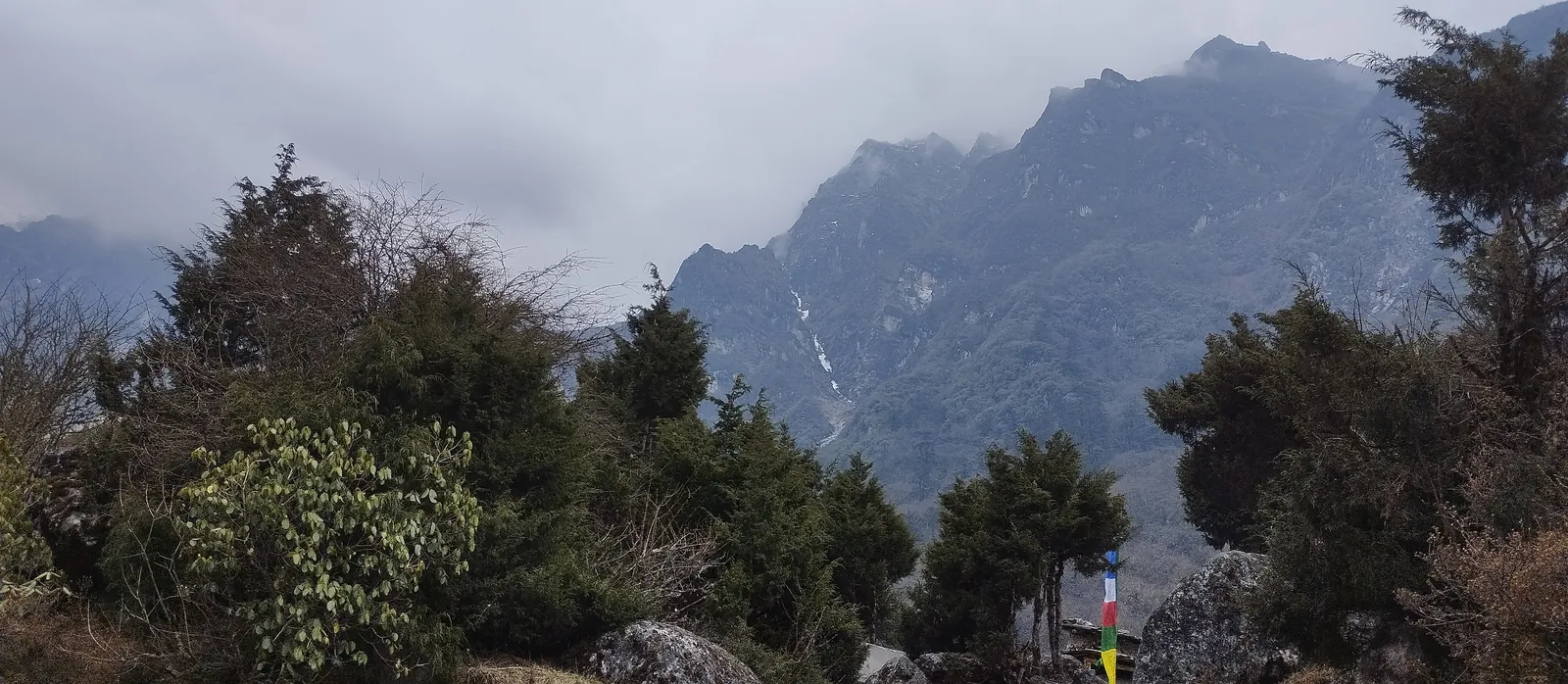
Photo: Remote Nepal Treks, 29 Apr 2023.
The short version
We grade the Kanchanjunga Trek Very Challenging, the hardest of the routes we run. It's 21 days with 18 days of walking, about 185km, a high point of 5,140m at Pangpema, several nights above 4,500m, and the Sele La complex: three passes above 4,200m in one 8 to 9 hour day. None of it is technical. What makes it hard is length, altitude and remoteness. What makes it manageable is three acclimatization stops, an assistant guide above Ghunsa and a weather buffer for the Sele La.
The short grade
| Kanchanjunga | |
|---|---|
| Our grade | Very Challenging |
| Length | 21 days, 18 walking |
| Distance | ~185km |
| High point | Pangpema, 5,140m |
| Hardest day | Sele La complex, 8–9 hrs |
| Technical climbing | None |
| Walking days | 3–4 hrs (shortest) to 8–9 hrs |
We use four grades across our routes. Tsum Valley is Moderate, Manaslu is Challenging, Makalu is Strenuous, and Kanchanjunga sits at the top as Very Challenging. The grade comes from how many demanding days sit together on one trip, more than from any single day.
It's long
Three weeks is a long time on a trail. Most people can manage one hard day. On Kanchanjunga, you do it again the next day, and the one after. There are short recovery days, 3 to 4 hours, but there are also plenty of 5 to 6 hour days, and the longest are 8 to 9.
The reason is geography. You visit both base camps of the same mountain, Pangpema in the north and Oktang in the south, and there's no shortcut between them. The road-head at Taplejung is several days from the high country at each end, too.
It goes high and stays high
Pangpema, the North Base Camp, is 5,140m, the highest point of the trek. You reach it on a day trip from Lhonak (4,780m), and you spend several nights above 4,500m: Lhonak twice and Ramche once. Oktang, the South Base Camp viewpoint, is 4,730m.
That's higher than our Manaslu route's highest night (Dharamsala, 4,460m) and you stay up there longer. So we spread the climb out with three acclimatization points: a rest day at Ghunsa (3,595m), another at Khambachen (4,050m), and the Lhonak-to-Pangpema-and-back day, which works as climb high, sleep low.
The Sele La complex
Day 15 is the hardest single day. From Ghunsa you cross three linked passes, the Sele La, Sinion La and Mirgin La, all above 4,200m, and come down to camp at Cheram. It's about 13km and 8 to 9 hours, with no village in between.
On our spring 2023 trip, the crossing on 3 May was snow from one side to the other. We've written that up in the Kanchanjunga Trek in spring. It wasn't technical. It was long and cold, and the guide picked the line. We only attempt it with a clear forecast, and a weather buffer day is built into the itinerary for exactly that.
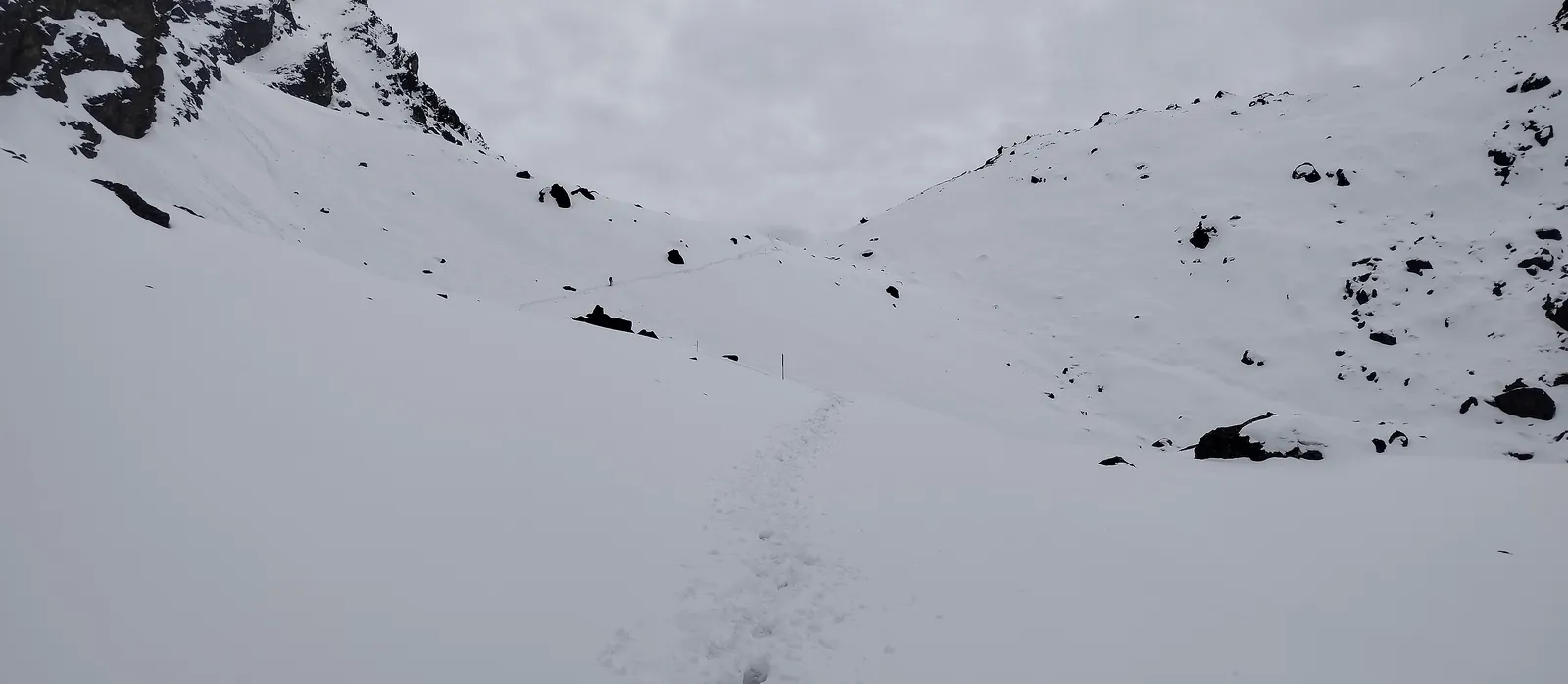
Photo: Remote Nepal Treks, 3 May 2023.
It's remote
Kanchanjunga sees a small fraction of Everest Base Camp's traffic, which is the appeal and also part of the grade. Rescue response times run longer than on the Everest or Annapurna routes, facilities thin out above Ghunsa, and from the high camps you're a long way from a road.
We plan around it. An assistant guide joins the team above Ghunsa for the upper sections, a kitchen crew covers the camp-supported stretch from Lhonak through Ramche, and your guide team carries a full first aid kit, a pulse oximeter and an evacuation plan.
Who it suits
You're a good fit if you've already done at least one trek above 4,500m, ideally with a multi-day high pass crossing, like the Larkya La on the Manaslu Circuit. You know how your body handles altitude, and you're comfortable with basic lodges and some camp nights.
Think about a stepping stone first if your highest trek so far was below 4,000m, or you've never done more than a week or so on the trail. The Manaslu Circuit's grade is one notch down, and Manaslu first, Kanchanjunga next is a good order.
Fitness that helps: steady walking for 6 hours with a daypack, on hills, several days in a row. Speed doesn't matter. Being able to get up and do it again does.
What makes it manageable
It reads like a lot. On the ground it's paced well. Short days follow hard ones, rest days sit where the altitude jumps, the Sele La waits for good weather, and teahouses and lodges cover most nights, with the kitchen crew filling in higher up.
For the day-by-day shape of the trip, see our Kanchanjunga itinerary, day by day, or go straight to the Kanchanjunga trek page. Our Kanchanjunga Trek guide covers permits and cost.
Frequently asked
How difficult is the Kanchanjunga Trek?
We grade it Very Challenging, the hardest of our routes. It's 21 days, about 185km, with a high point of 5,140m at Pangpema and the Sele La complex, three passes above 4,200m in one day. No technical climbing is needed.
Is Kanchanjunga harder than the Manaslu Circuit?
Yes. Manaslu is 15 days and we grade it Challenging. Kanchanjunga is 21 days, goes higher, spends more nights above 4,500m and is more remote.
Can a beginner do the Kanchanjunga Trek?
We don't recommend it as a first high-altitude trek. Ideally you've done at least one trek above 4,500m first, with a high pass crossing such as the Larkya La on Manaslu.
What is the hardest day on the Kanchanjunga Trek?
Day 15, Ghunsa over the Sele La complex to Cheram: three passes (Sele La, Sinion La, Mirgin La) above 4,200m, about 13km and 8 to 9 hours, with no village in between.
How many acclimatization days does the Kanchanjunga Trek have?
Three acclimatization points: rest days at Ghunsa and Khambachen, and the Lhonak to Pangpema and back day, which works as climb high, sleep low.