
Tsum Valley Trek guide: the restricted valley with no high pass
Written by our trekking team
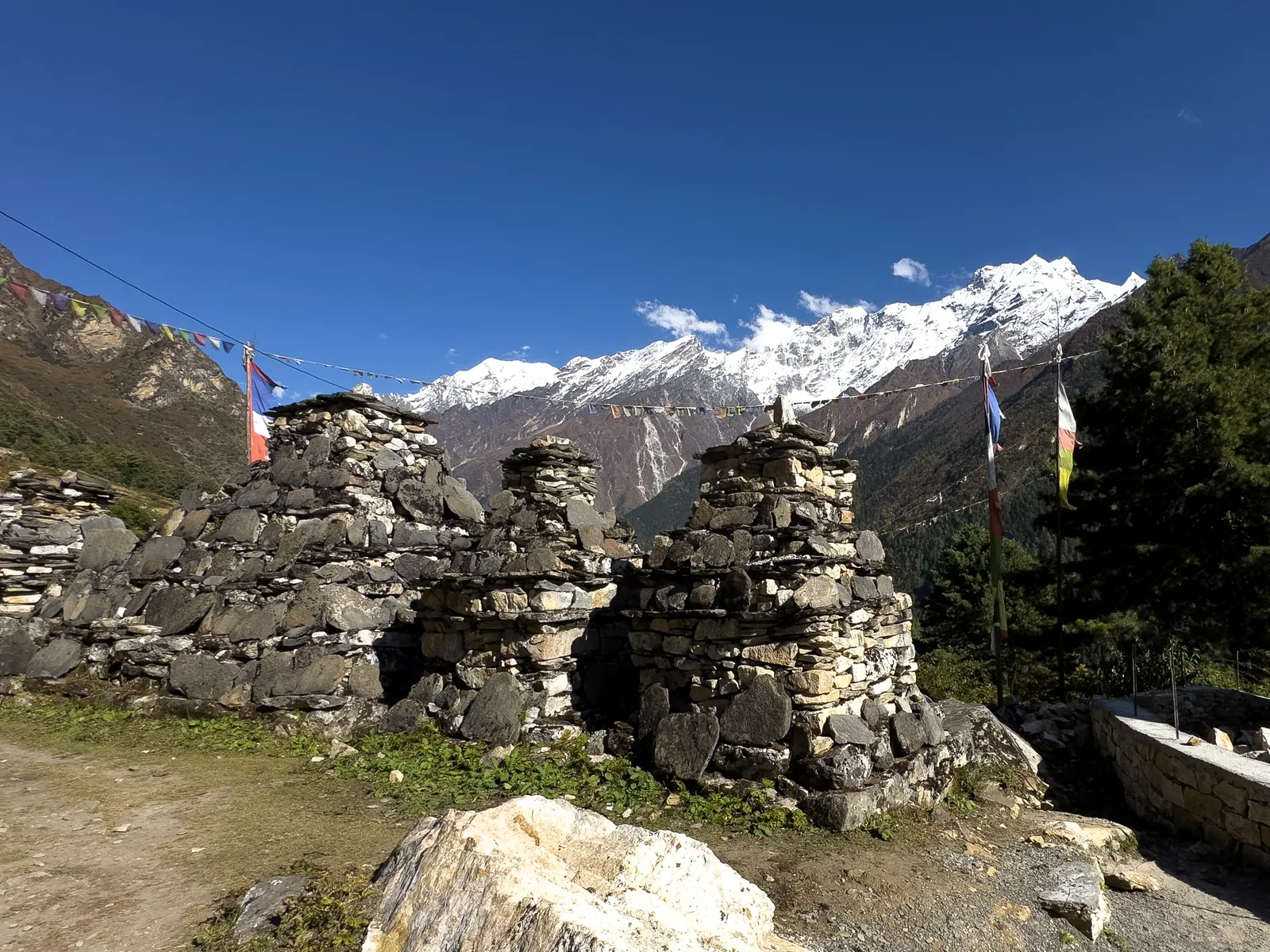
Photo: Remote Nepal Treks.
The short version
The Tsum Valley Trek is 13 days into a restricted Tibetan-culture valley north of Manaslu, topping out at Mu Gompa (about 3,700m). There's no high pass, so it's the gentlest of the treks we run. You walk up the Budhi Gandaki from Machha Khola, turn off near Philim, and climb through Chumling, Chhokangparo and Nile to Mu Gompa, then come back the same way. You need a Restricted Area Permit and the MCAP, a licensed guide, and at least one other trekker. Teahouses every night.
What the Tsum Valley is
Tsum is a side valley of the upper Budhi Gandaki, running north from the Manaslu trail toward the Tibet border. It's a restricted area, so it only sees trekkers who come with a permit and a licensed guide. That keeps the numbers low.
What you walk through is a Tibetan Buddhist valley that still runs on its own rhythm. Mani walls line the trail between villages. Chortens stand at every bend, and there are gompas above the fields at Chumling, Chhokangparo and Nile. Near Chhokangparo is Rachen Gompa, a nunnery. At the top of the valley sits Mu Gompa, its highest monastery.
People sometimes call Tsum a hidden valley. After a day on the busy Everest or Annapurna trails, you'd see why. Here you'll share the trail mostly with the people who live in the valley.
The route, day by day
It's an in-and-out route. You follow the Budhi Gandaki up from Machha Khola for two days, on the same trail as the Manaslu Circuit, then turn off into Tsum past Philim. The way out retraces the way in. These are the figures from our 13-day Tsum Valley itinerary.
| Day | Stage | Sleep at | Hours |
|---|---|---|---|
| 1 | Arrive in Kathmandu | 1,400m | — |
| 2 | Drive to Machha Khola | 869m | 8–9 hrs drive |
| 3 | Machha Khola → Jagat | 1,340m | 6–7 hrs |
| 4 | Jagat → Lokpa | 2,240m | 6–7 hrs |
| 5 | Lokpa → Chumling | 2,386m | 4–5 hrs |
| 6 | Chumling → Chhokangparo | 3,010m | 5–6 hrs |
| 7 | Chhokangparo → Nile | 3,361m | 5–6 hrs |
| 8 | Nile → Mu Gompa (3,700m) → Chhokangparo | 3,010m | 8–9 hrs |
| 9 | Chhokangparo → Chumling | 2,386m | 5–6 hrs |
| 10 | Chumling → Lokpa | 2,240m | 4–5 hrs |
| 11 | Lokpa → Jagat | 1,340m | 6–7 hrs |
| 12 | Jagat → Machha Khola | 869m | 5–6 hrs |
| 13 | Drive back to Kathmandu | 1,400m | Full day |
Ten trekking days in all. Day 3 has a treat in it: the natural hot springs at Tatopani, on the way up to Jagat. Our favorite moment comes later, above Chhokangparo, when the upper valley suddenly opens out ahead of you.
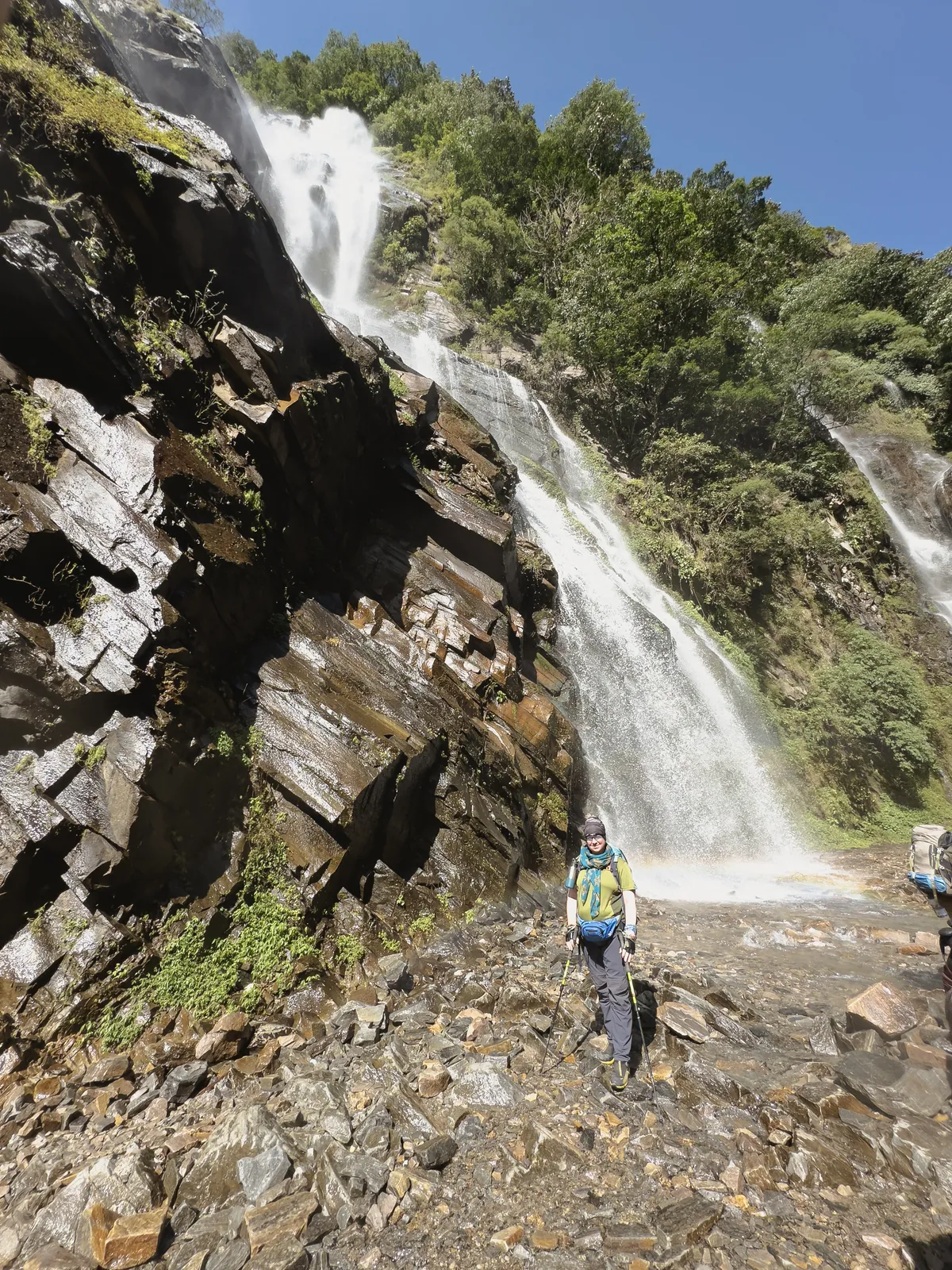
Photo: Remote Nepal Treks.
How hard it is
We grade Tsum as Moderate. The altitude is gentler than on our other restricted-area treks, but the days are real days.
The altitude. You never sleep higher than Nile at 3,361m. The height gain comes in steady steps: Chumling at 2,386m, Chhokangparo at 3,010m, then Nile. On the Mu Gompa day you go up to about 3,700m and come back down to sleep at Chhokangparo. Climb high, sleep low. Our post on how acclimatization works on these treks explains why that matters.
The walking. Most days are 4 to 7 hours. The long one is Day 8, the Mu Gompa day, at 8 to 9 hours. Jagat to Lokpa climbs 900m, and the trail is steep and uneven in places.
The skills. None needed. There's no glacier, no snow pass and no technical ground. Steady fitness for back-to-back trekking days is what counts.
Your guide carries a first aid kit and a pulse oximeter and has a standing evacuation plan. You'll need travel insurance that covers high-altitude evacuation.
Permits and group rules
Tsum needs two permits. The Restricted Area Permit (RAP) is specific to Tsum Valley and only a licensed agency can get it for you. The Manaslu Conservation Area Permit (MCAP) covers the shared Budhi Gandaki approach. Both get checked at Jagat on Day 3.
The RAP also sets the group rules. You need at least two trekkers in the group, and a licensed guide walks the whole route with you. We file the paperwork before you land, so all you bring is your passport and some passport photos. Our permits explainer goes through how the RAP works across all our routes.
We haven't published a price for Tsum yet, because permit fees and porter rates are still being confirmed. Ask us and we'll quote a firm figure. That figure includes both permits, your guide and porters, 11 nights of teahouse lodging and all meals on the trek.
Teahouses and food
Every night is in a teahouse, so there's no camping. Rooms are simple twin-share with shared bathrooms, and they get more basic as you go up the valley. But you get a real bed and a hot meal every night.
The food is cooked fresh at each lodge: dal bhat with refills, noodle soups, momos, porridge and Tibetan bread, with plenty of tea. Evenings get cold higher up, so a down jacket and a warm sleeping bag earn their place. Our Tsum packing list has the rest.
When to go
Autumn (September to November) is the most popular window. After the monsoon the skies clear and the days are settled. On a clear day from Chhokangparo you can see Ganesh Himal and Sringi Himal.
Spring (March to May) is just as good, with rhododendron in bloom through the lower forest. The government sets the permit dates, so we confirm yours when you book. Our season comparison covers the autumn and spring trade-offs in more depth.
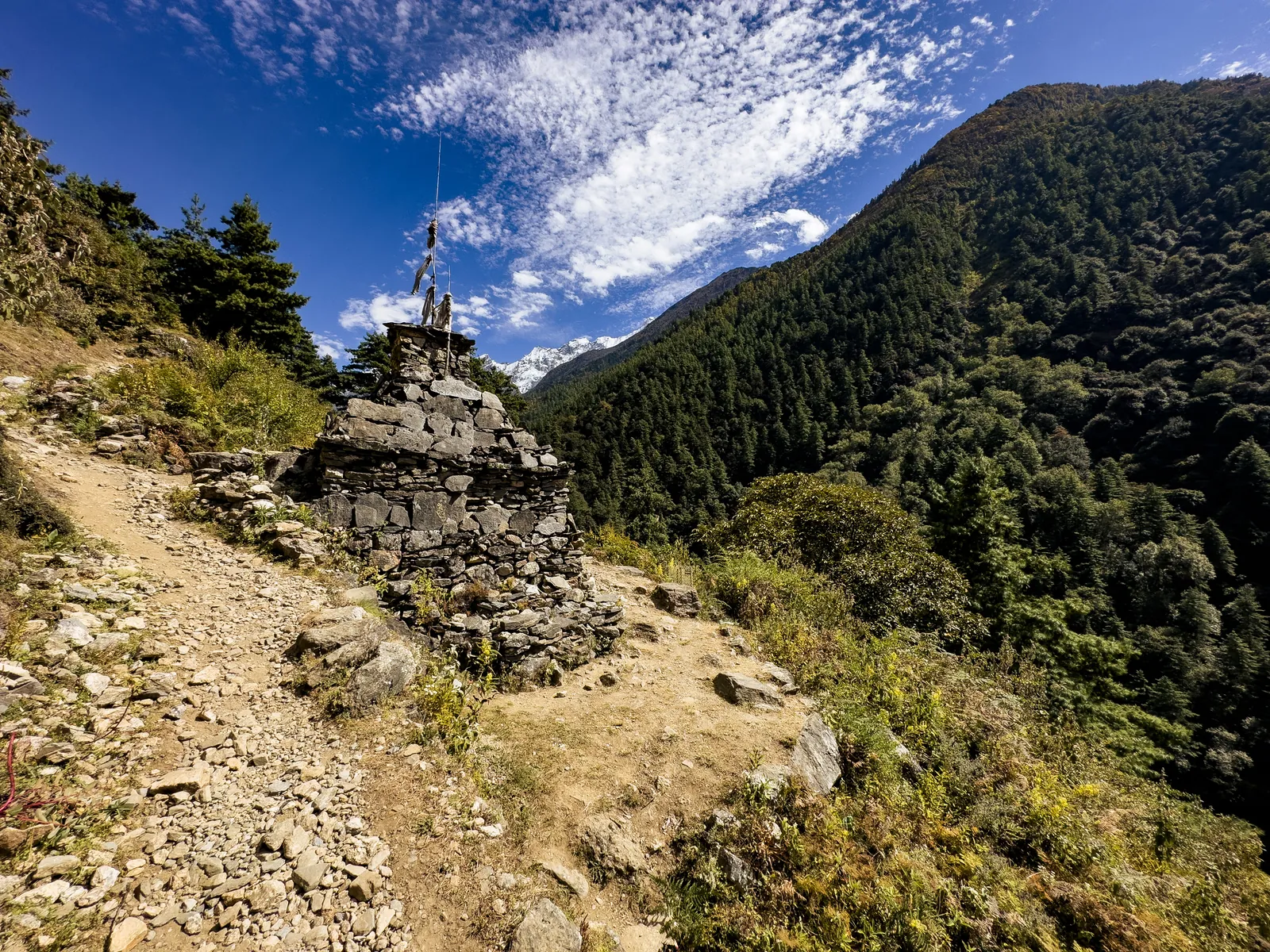
Photo: Remote Nepal Treks.
Tsum or the Manaslu Circuit?
Both start at Machha Khola and share the Budhi Gandaki trail as far as Philim. After that, the Manaslu Circuit carries on north and crosses the 5,106m Larkya La. Tsum turns off into its own valley and stays below about 3,700m.
- Pick Tsum if you want the restricted-area quiet and the monasteries without a high pass, or you have about two weeks.
- Pick the Manaslu Circuit if the big pass is the point. Our Manaslu Circuit guide covers it.
- Do both if you have the time. Because the routes share their first days, we can join them into one trip: see our 21-day Manaslu and Tsum Valley trek.
One honest note: we wouldn't make Tsum your very first trek. It suits people with some multi-day trekking behind them who are fine with steep trails and simple lodges. If that's you, it's one of the most rewarding two weeks you can spend in Nepal.
Frequently asked
Do you need a special permit for the Tsum Valley?
Yes. Tsum needs its own Restricted Area Permit (RAP) plus the Manaslu Conservation Area Permit (MCAP) for the shared Budhi Gandaki approach. Only a licensed agency can arrange the RAP, and you need at least two trekkers and a licensed guide.
How high does the Tsum Valley Trek go?
The high point is Mu Gompa at about 3,700m, reached on a day trip from Nile. You never sleep higher than Nile at 3,361m, and there is no high pass to cross.
How many days is the Tsum Valley Trek?
Our itinerary is 13 days door to door from Kathmandu, with 10 trekking days. Walking days run from 4 to 5 hours up to 8 to 9 hours on the Mu Gompa day.
Is the Tsum Valley Trek teahouse or camping?
Teahouse every night. Rooms are simple twin-share with shared bathrooms, and meals are cooked fresh at each lodge, so you don't need any camping gear.
Can you combine Tsum Valley with the Manaslu Circuit?
Yes. The two routes share the trail from Machha Khola to Philim, so we can join them into one trip. Ask us for a combined itinerary and quote.