
Camping on the Makalu trek: tents, crew and meals
Written by our trekking team
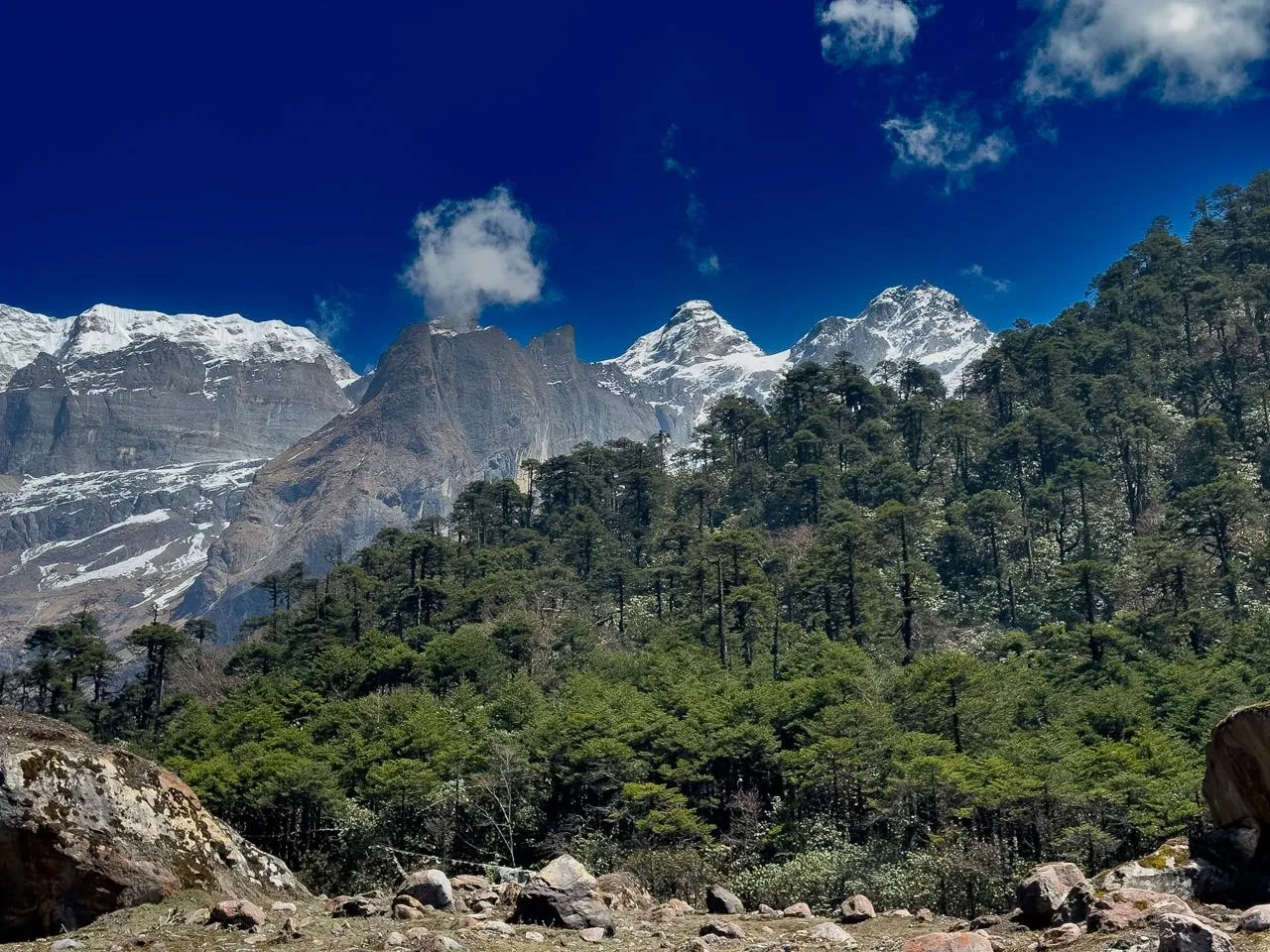
Photo: Remote Nepal Treks, Apr 2026.
The short version
From Khongma Danda to Makalu Base Camp and back, you sleep in tents and our crew cooks every meal. Teahouses run only from Tumlingtar to Tashi Gaon. Above that, a cook, kitchen staff and porters carry the camp, pitch it each afternoon and serve dal bhat, soups, pasta and hot drinks. Meals are included, just as on a teahouse trek. Your part is a warm sleeping bag rated to at least -20°C, good layers for camp evenings and a daypack.
Why Makalu is a camping trek
On Everest or Annapurna you can walk from lodge to lodge for weeks. In the Makalu-Barun National Park the lodge network never got built past Tashi Gaon, the last village on the route. So from Day 6 to Day 16 we bring our own.
It's also why the Barun valley is still this empty, and why very few operators run this base camp at all.
| Days | Stretch | Where you sleep |
|---|---|---|
| 2–5 | Tumlingtar, Num, Seduwa, Tashi Gaon | Guesthouse and teahouses |
| 6–15 | Khongma Danda to Makalu Base Camp and back to Yangle Kharka | Camp |
| 16–17 | Tashi Gaon, Tumlingtar | Teahouse, guesthouse |
Ten nights under canvas, then.
Who's in the crew
Your licensed guide walks the whole trek, as on all our routes. Above Tashi Gaon a cook, kitchen staff and porters join, and they stay with the group through the Shipton La complex, the Barun valley and base camp, and back over the passes.
We cap Makalu groups at 6 trekkers. That's the number one camp crew can look after comfortably above Khongma Danda, and it keeps camps small and quiet.
What they carry. Tents, the kitchen, food and fuel, and your duffel bag. You carry a daypack.
What they do. Pitch camp, cook, boil water, strike camp in the morning and get ahead of you on the trail so the next camp is going up when you arrive.
A camp day, start to finish
Mornings start with a hot drink. You pack your duffel, eat breakfast, and set off with your guide while the crew strikes camp behind you. On most days the porters overtake you somewhere along the trail.
You walk with a daypack: water, snacks, a warm layer, shell, sun protection. Walking days range from about 4 hours (Merek to base camp) to 8 or 9 (the Shipton La day).
Afternoons are the best part of camp life. You arrive to tents already up and a kettle on. There's time to sort your gear, rest, and walk a little around camp before the light goes.
Dinner is early and filling, and nights are early too. Above 4,000m the temperature drops fast once the sun's off the camp.
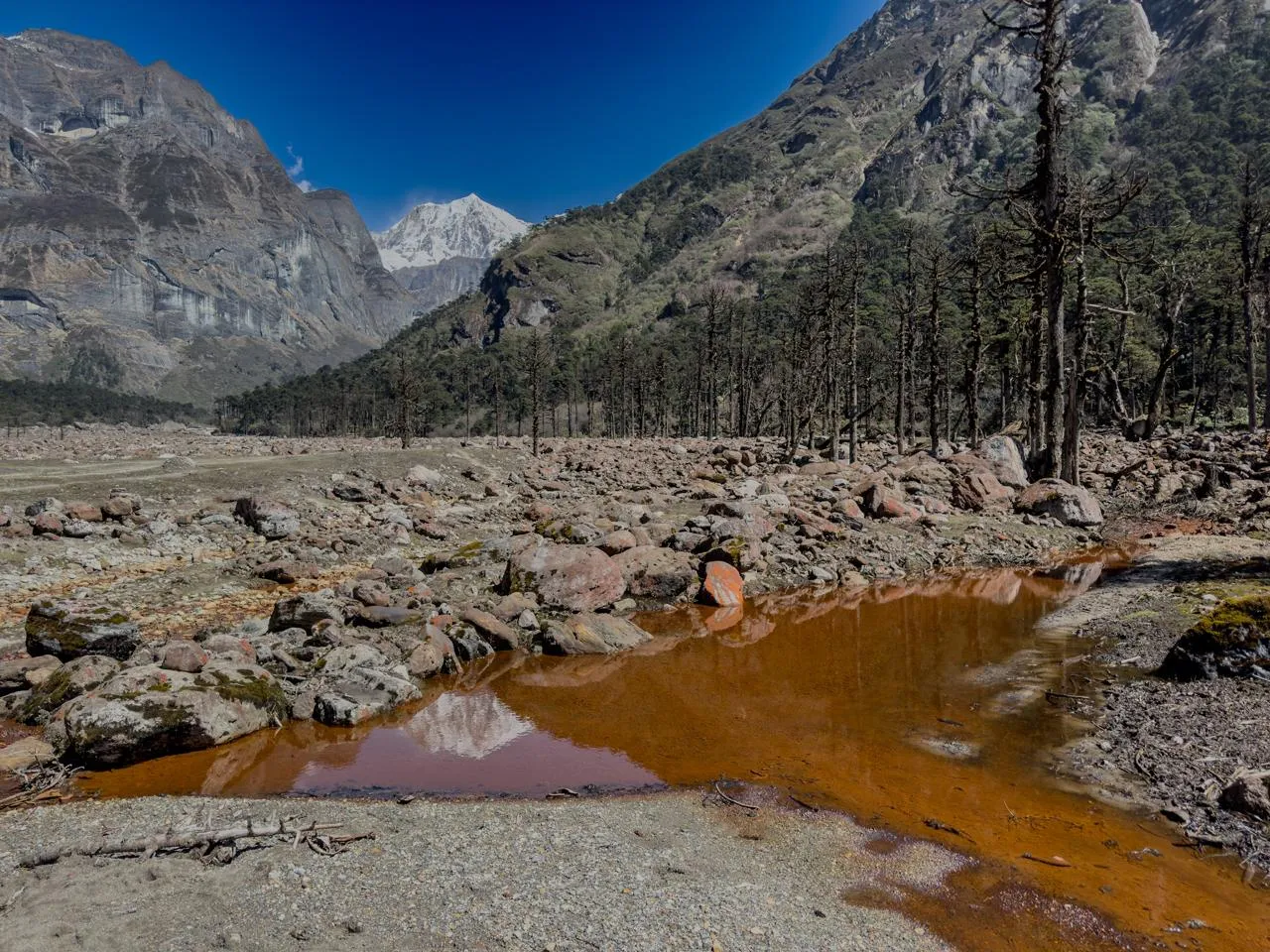
Photo: Remote Nepal Treks, Apr 2026.
What you eat
The cook prepares every meal fresh at camp: dal bhat, soups, pasta and hot drinks in the evening, plus breakfast and lunch on the trail. All trek meals are in the price, the same as on our teahouse routes.
Bring a few snacks or energy bars from home if you have favorites. They're on the packing list because a familiar snack at 4,400m is worth its weight.
Cold nights and staying warm
Several camp nights are above 4,000m: Langmale Kharka (4,410m), Merek (4,570m) and two nights at base camp (4,870m). That's why our Makalu list asks for a sleeping bag rated to at least -20°C, colder than the -15°C bag we suggest for the Manaslu teahouses.
A few things make camp nights easy:
- A heavyweight down jacket and insulated camp trousers for the evenings. You'll live in them after dark.
- A warm hat and dry socks you only wear in the tent.
- A sleeping pad. The crew provides one, but check with us before departure.
- A headlamp with spare batteries within reach.
The full list, with the reasons, is in our Makalu packing list.
Safety at camp
Your guide carries a first aid kit, a pulse oximeter and a standing evacuation plan. Two acclimatization days, at Khongma Danda and Langmale Kharka, and the exploration day at base camp pace the climb. The crew being with you the whole way also means there are always people around who know the valley.
If you've only done teahouse treks
If your experience so far is lodges, as on the Manaslu teahouses, camping will feel different mainly in the evenings: a dining tent instead of a lodge dining room, a tent instead of a twin room. The walking is the same. If anything, you get more rest, because nobody is waiting for a room or a table.
Our Makalu Base Camp Trek guide covers the whole route, and the Makalu itinerary lists every camp by day.
Frequently asked
Is the whole Makalu trek camping?
No. You stay in teahouses and guesthouses from Tumlingtar to Tashi Gaon. You camp from Khongma Danda (Day 6) to the Barun valley and base camp, then back over the Shipton La complex to Tashi Gaon on Day 16.
Are meals included on the camping stretch?
Yes. Our cook prepares every meal at camp, including dal bhat, soups, pasta and hot drinks, and all trek meals are in the price.
Do I need to bring a tent?
No. The crew carries and pitches the tents. You bring your own sleeping bag rated to at least -20°C. A sleeping pad is provided by the crew, but confirm it with us before you leave.
How many people are in a Makalu group?
At least two, because the Restricted Area Permit needs it, and at most six, which is what one camp crew supports comfortably above Khongma Danda.
What do I carry each day?
Just a daypack with water, snacks, layers and sun protection. Porters carry your duffel and the camp.