
How many days do you need for the Manaslu Circuit?
Written by our trekking team
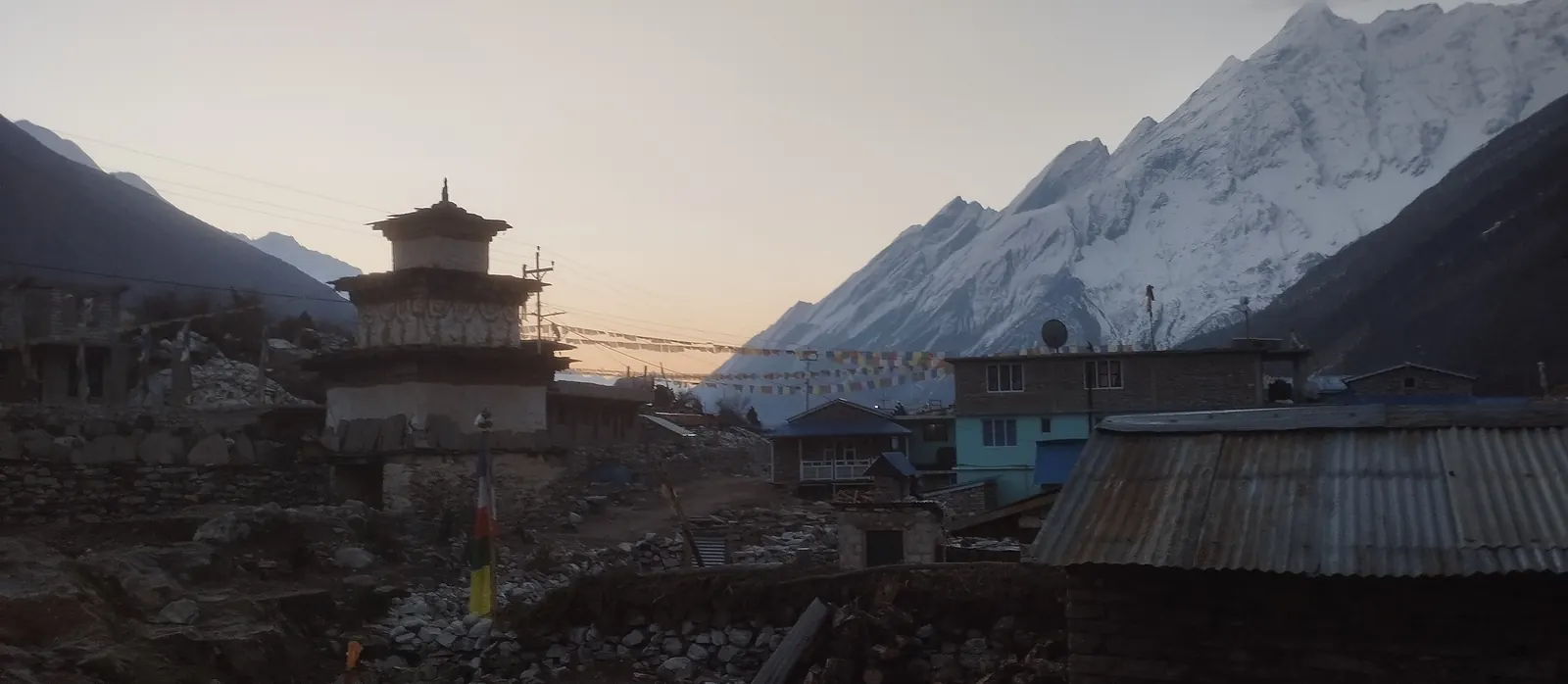
Photo: Remote Nepal Treks, 30 Mar 2023.
The short version
Plan on 15 days in Nepal. That's our itinerary door to door: you land in Kathmandu on Day 1 and fly home on Day 15. Ten of those days are on foot, from Machha Khola over the 5,106m Larkya La to Tilije, including a rest day at Samagaon. Two days are the drive in and out of the mountains, and the last day is a buffer in case the road back runs late. The days that look easiest to cut are the ones that get you over the pass comfortably.
Where the 15 days go
The Manaslu Circuit isn't a trek you can start from Kathmandu's doorstep. The trail begins at the end of a long mountain road and finishes at the start of another, so the 15 days split into three parts: getting there, walking, and getting back.
| Day | What happens | Sleep at | Days |
|---|---|---|---|
| 1 | Arrive in Kathmandu | Kathmandu, 1,400m | 1 day |
| 2 | Drive to Machha Khola (8–9 hrs) | Machha Khola, 869m | 1 day |
| 3–7 | Up the Budhi Gandaki to Samagaon | Jagat → Samagaon, 3,530m | 5 days |
| 8 | Rest and acclimatization day | Samagaon, 3,530m | 1 day |
| 9–10 | Short days to the foot of the pass | Samdo → Dharamsala, 4,460m | 2 days |
| 11 | Larkya La (5,106m) crossing | Bimtang, 3,720m | 1 day |
| 12 | Descent to the road | Tilije, 2,300m | 1 day |
| 13–14 | Jeep to Besisahar, then road to Kathmandu | Besisahar, then Kathmandu | 2 days |
| 15 | Buffer day and departure | — | 1 day |
Add it up and you get 10 days on foot, 3 days on the road and 2 days in Kathmandu. The walking days run from 3 to 9 hours. For the hours, distance and altitude of each one, see our Manaslu itinerary, day by day.
The days you shouldn't cut
When people ask how to make the trek shorter, they usually point at the short days and the rest day. Those are the days doing the most work:
- The rest day at Samagaon (Day 8). You hike toward Manaslu Base Camp (around 4,800m) or walk the shorter route to Pungyen Gompa, then sleep a second night at 3,530m. Climbing high and sleeping lower is how your body adapts. Our note on how acclimatization is built into the itineraries explains why.
- The short days to Dharamsala (Days 9–10). Four hours to Samdo and three to four to Dharamsala look easy on paper. They keep each night's gain small, so you reach 4,460m ready for the pass rather than drained by it.
- The night at Dharamsala (Day 10). Sleeping right below the Larkya La means the longest day of the trek, 8 to 9 hours, starts at 4,460m instead of in Samdo.
- The buffer day (Day 15). Day 14 is a full day on the Prithvi Highway, and traffic sets the pace. If the road runs late, Day 15 absorbs it. If it doesn't, you get a free day in Kathmandu.
None of this makes the trek slow. It's what lets a Challenging trek feel manageable, and it's the main reason our honest difficulty grade is about stamina, not survival.
How much time off you need
Fifteen days in Nepal, plus however long your international flights take. You land on Day 1, and all that day asks of you is to meet your guide, go over the plan and join the welcome dinner. We've already filed your permits by then.
On the way home, book a flight that leaves on Day 15. That keeps the buffer day working as a buffer. Everything in between is taken care of, from the drive to Machha Khola to the jeep out of Tilije.
Want more days? Add the Tsum Valley
If you have more time, the natural add-on is the Tsum Valley, a restricted Tibetan-culture side valley north of Manaslu. Tsum and the Manaslu Circuit share their first days along the Budhi Gandaki before parting near Philim, so the two combine easily. On its own, the Tsum Valley Trek is 13 days and tops out at Mu Gompa, about 3,700m, with no high pass.
It needs its own Restricted Area Permit on top of the Manaslu permits, and we file both. Ask us for a combined itinerary and we'll put the days together for you.
Fitting the 15 days into the season
Restricted Area Permits for Manaslu are issued for the main trekking seasons, so your 15 days need to fall in autumn (September–November) or spring (March–May). Autumn brings the clearest skies. Spring brings rhododendrons in the lower forest and slightly warmer nights. Our post on the best time to trek compares the two.
Once you know your dates, the full plan is on the Manaslu trek page. For permits, cost and who the trek suits, start with our Manaslu Circuit Trek guide.
Frequently asked
How many days do you need for the Manaslu Circuit?
Plan on 15 days in Nepal. Our itinerary runs 15 days door to door: an arrival day in Kathmandu, a drive to the trailhead at Machha Khola, 10 days on foot including a rest day at Samagaon, two days of driving back to Kathmandu, and a buffer day before your flight home.
How many days of walking is the Manaslu Circuit?
Ten. Days 3 to 12 are on foot, from Machha Khola over the 5,106m Larkya La to Tilije, about 147km in total. One of those ten, Day 8 at Samagaon, is a rest day with an optional acclimatization hike.
Can I do the Manaslu Circuit in fewer days?
The days that look easiest to cut are the ones doing the most work. The Samagaon rest day and the short days up to Dharamsala are how your body adjusts to altitude before the 5,106m pass, and the two road days out are fixed by the drive itself. If you're short on time, tell us your dates and we'll talk it through honestly.
Can I add the Tsum Valley to the Manaslu Circuit?
Yes. Tsum Valley and the Manaslu Circuit share their first days along the Budhi Gandaki, so the two combine easily. On its own, the Tsum Valley Trek is 13 days. Ask us for a combined itinerary and quote.